When ocean needs a layout
Completed in: February 2026
Author: Prof. Marco Marcelli Laboratory of Experimental Oceanology and Marine Ecology DEB - University of Tuscia
Editor: Dina Eparkhina, EuroGOOS
Graphic design: Agata Smok
DOI: 10.5281/zenodo.18679671
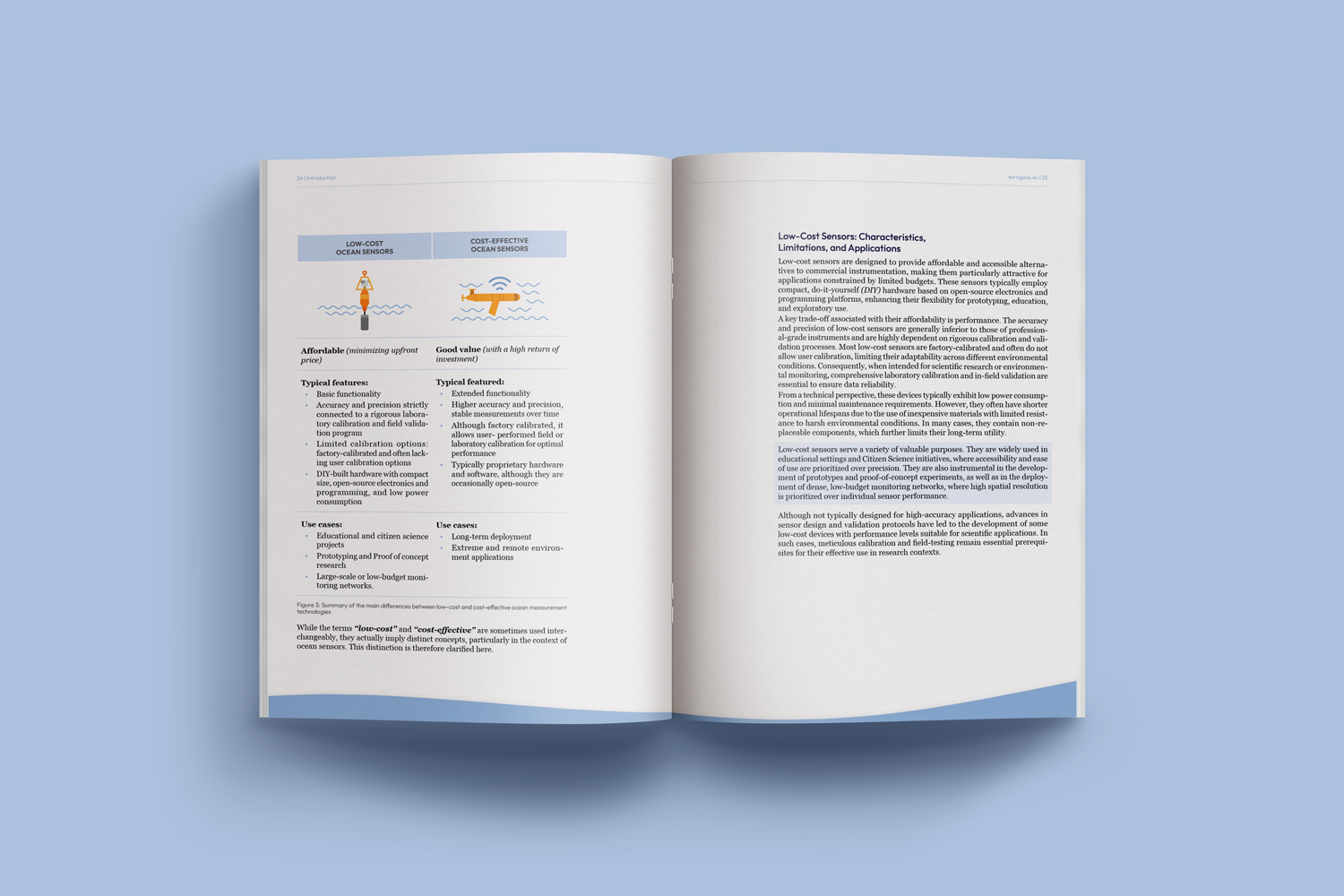
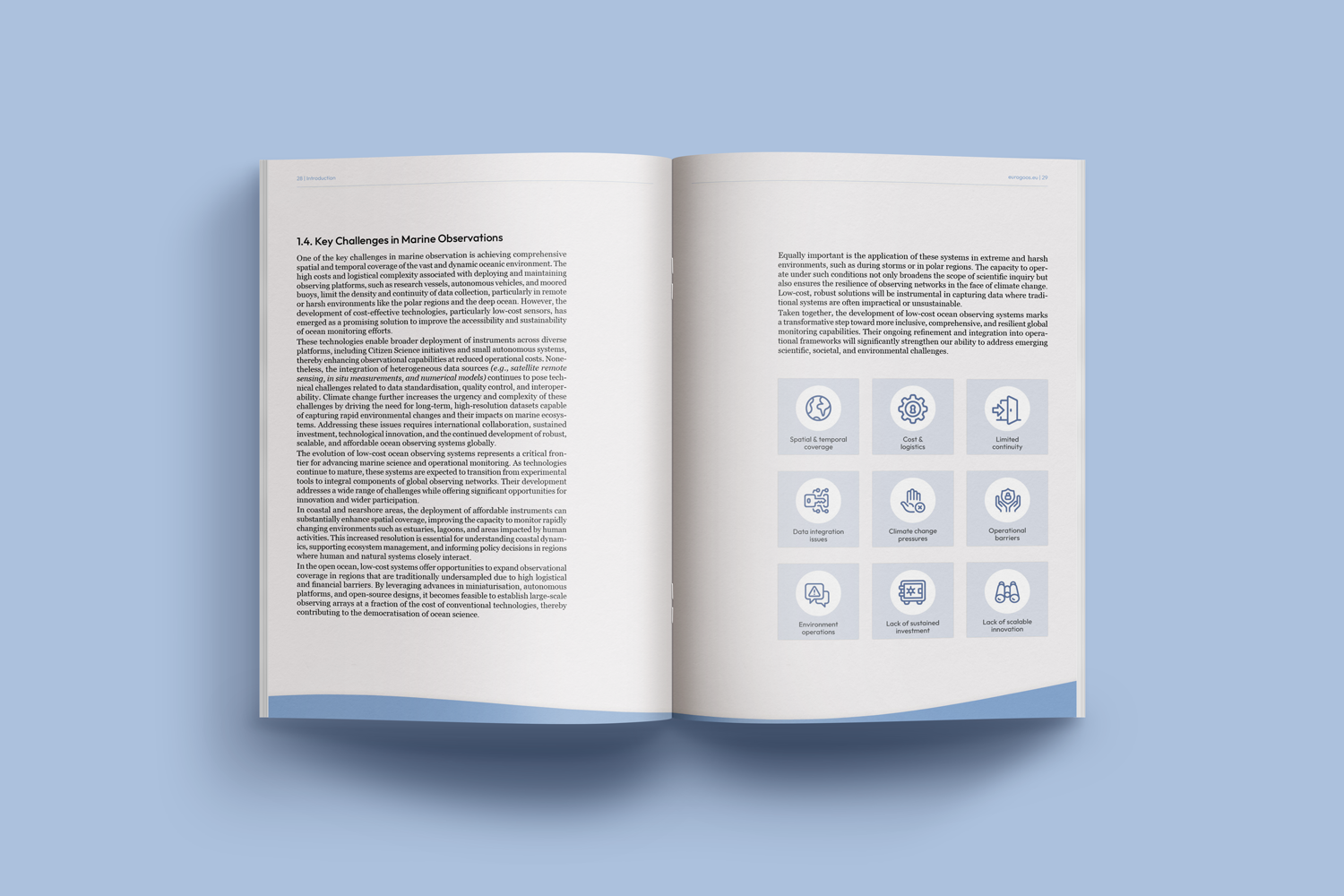
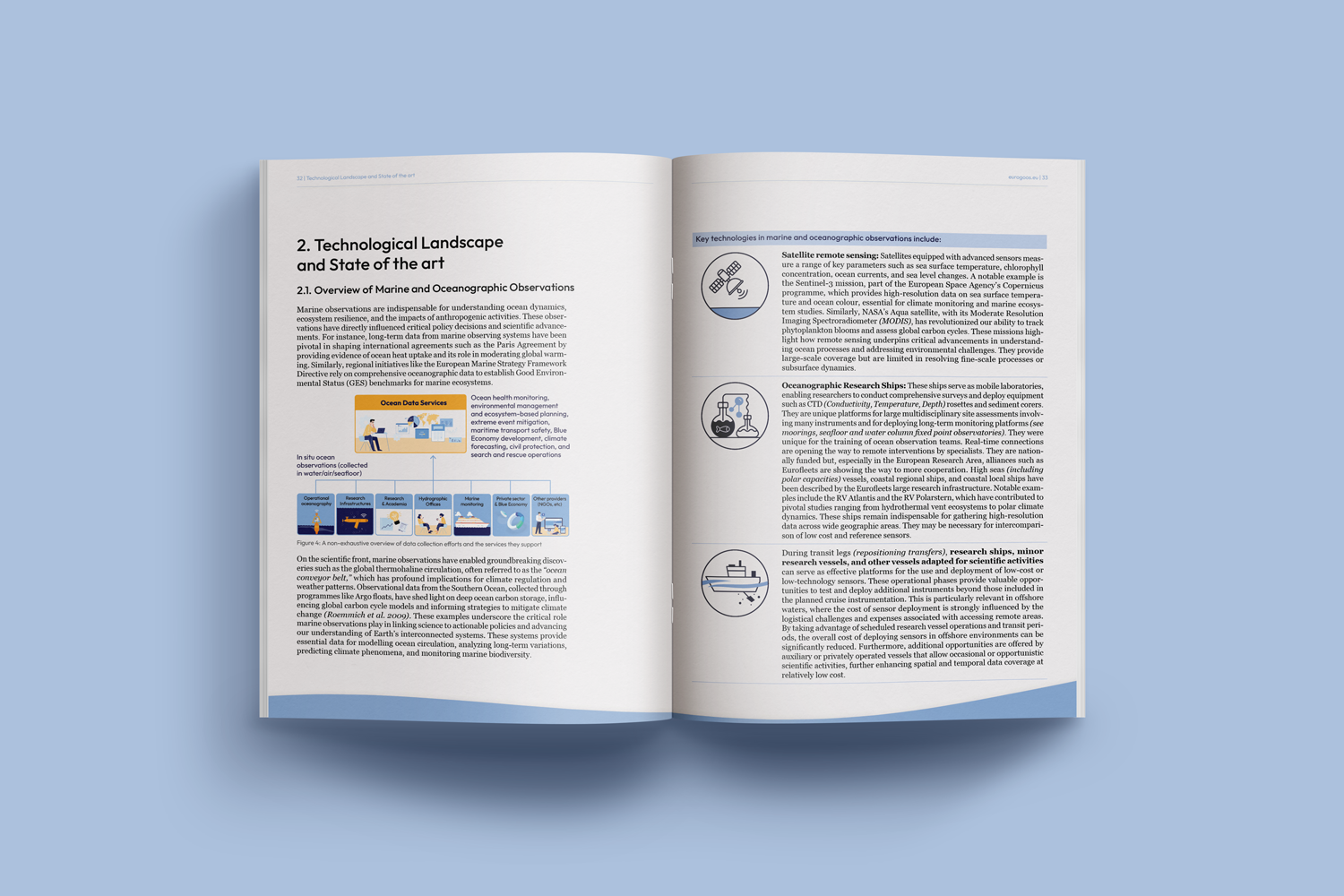
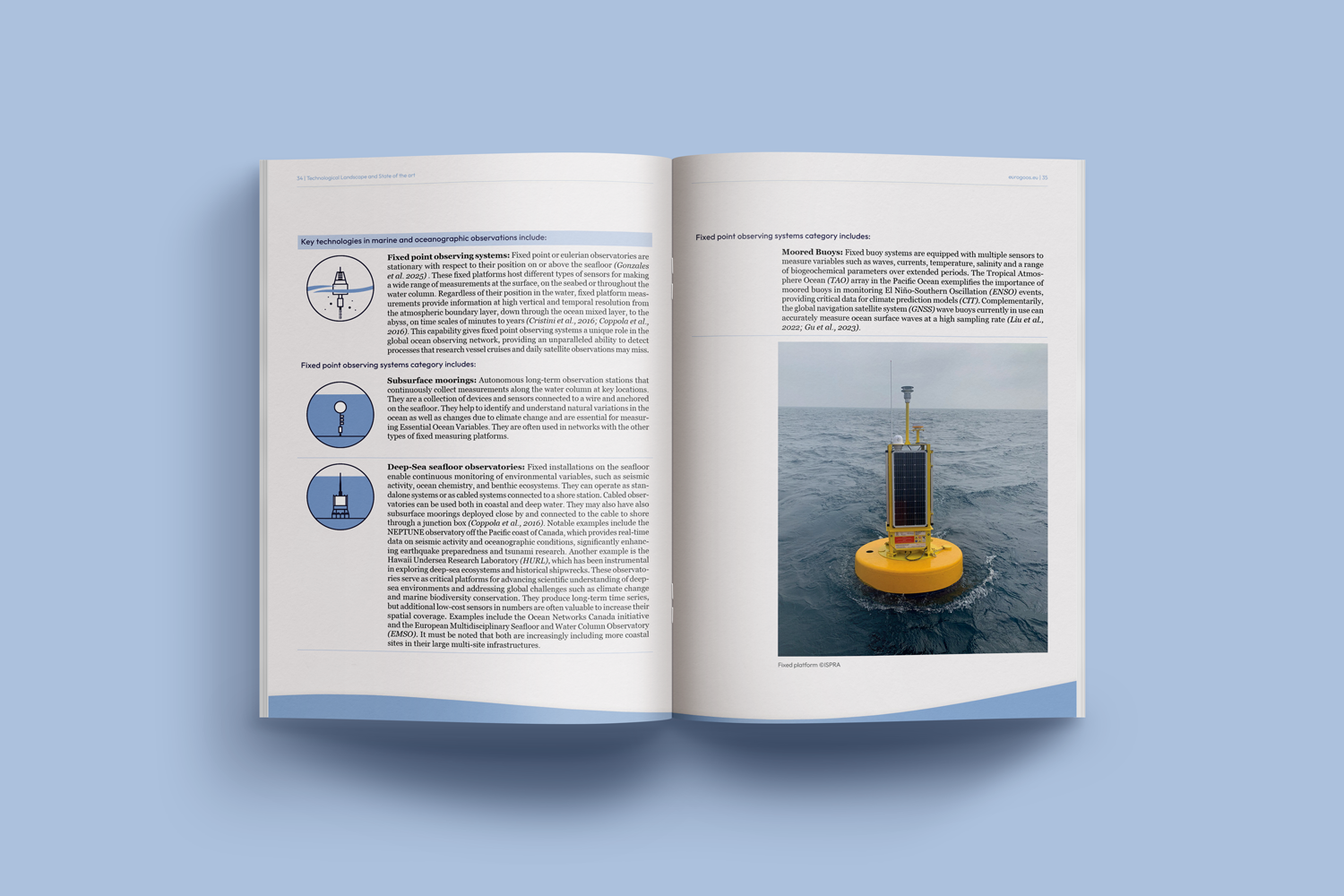
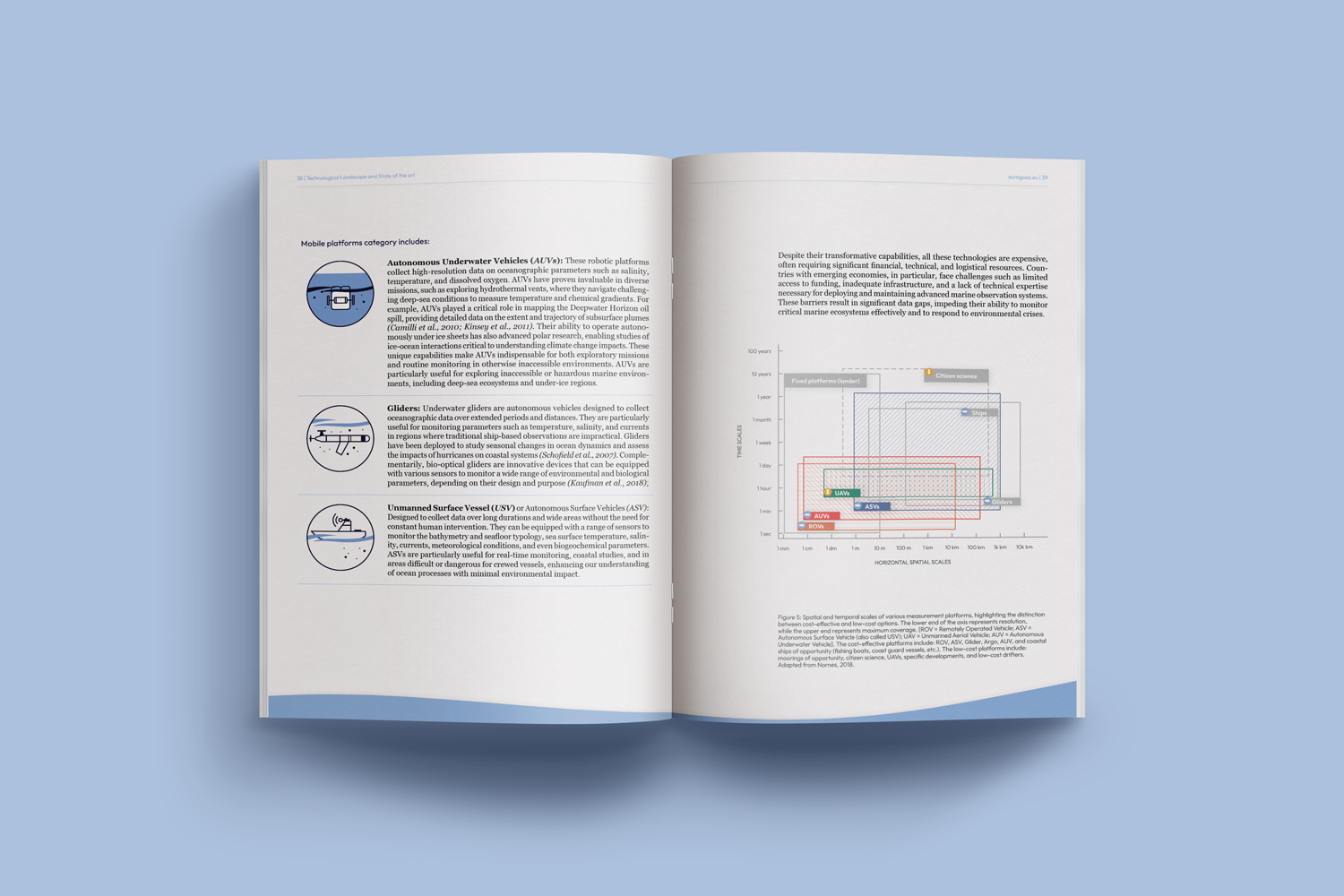
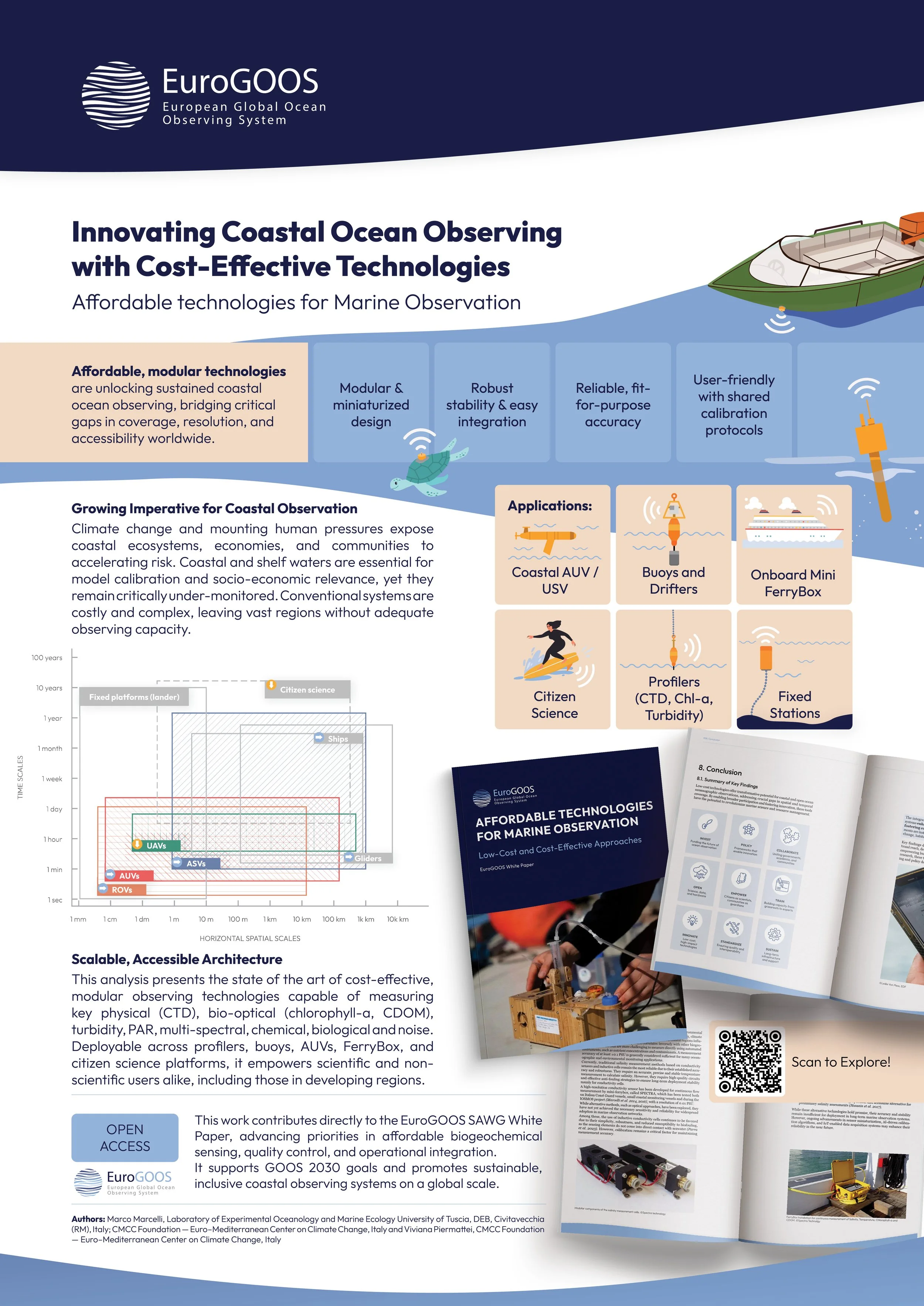
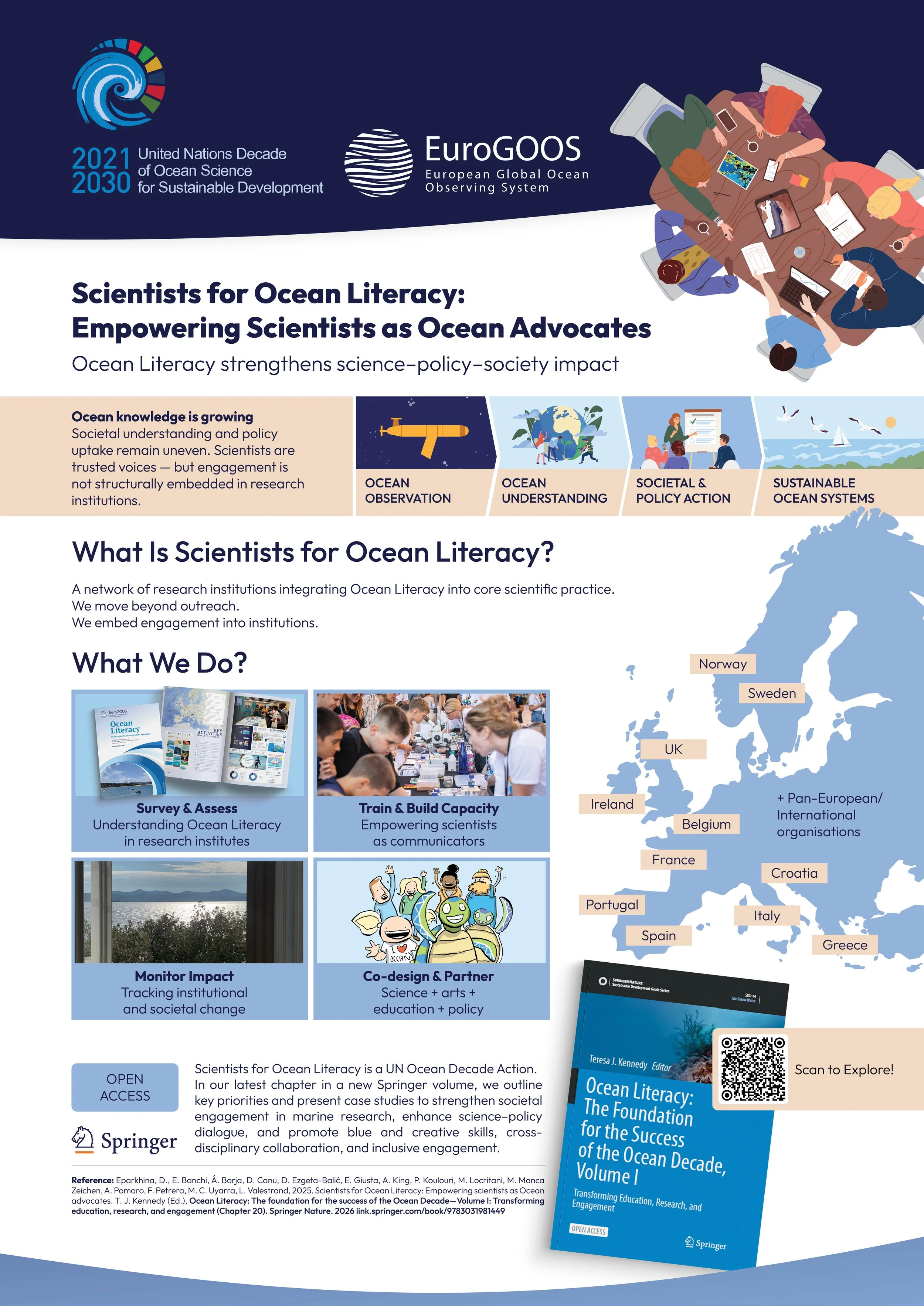
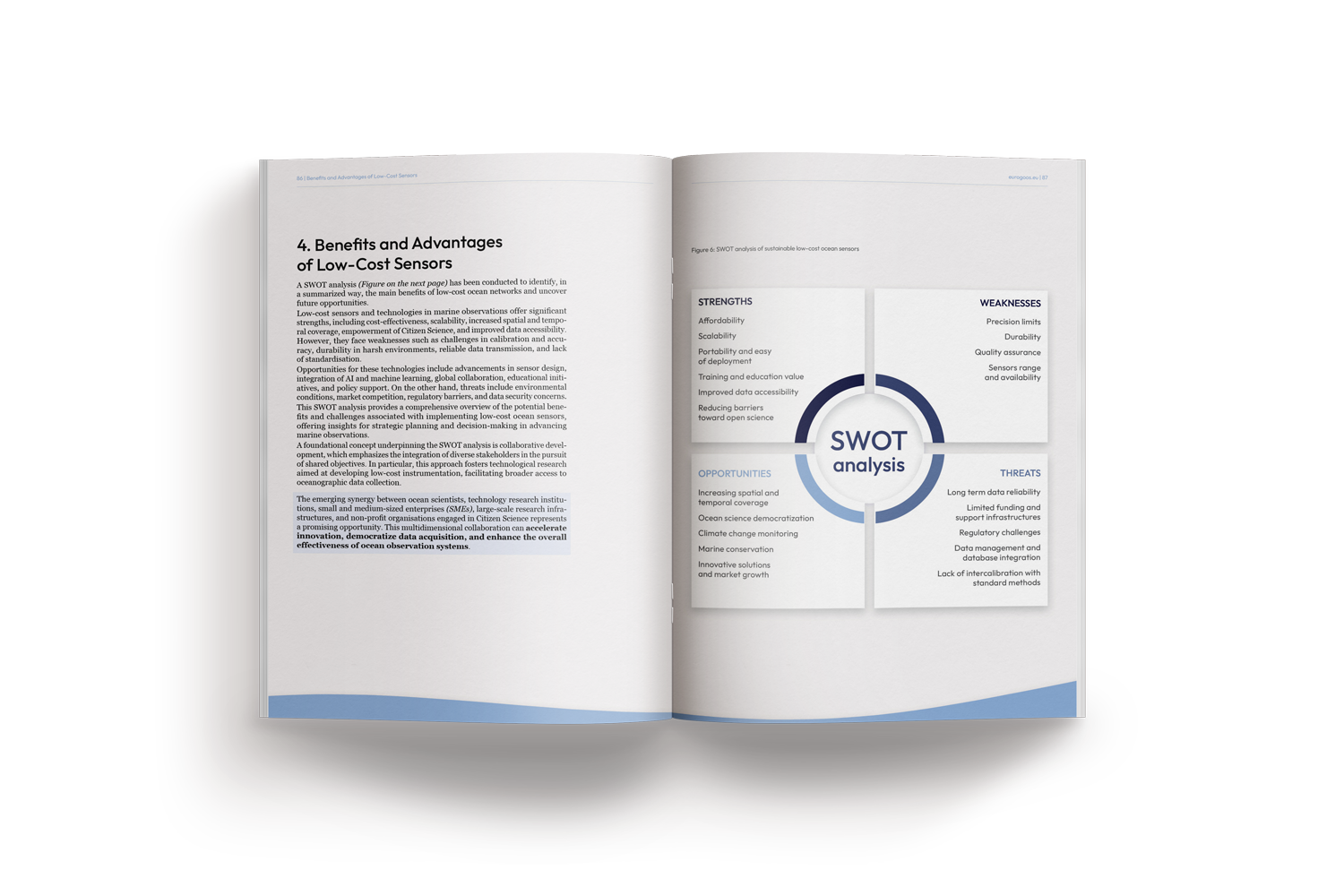
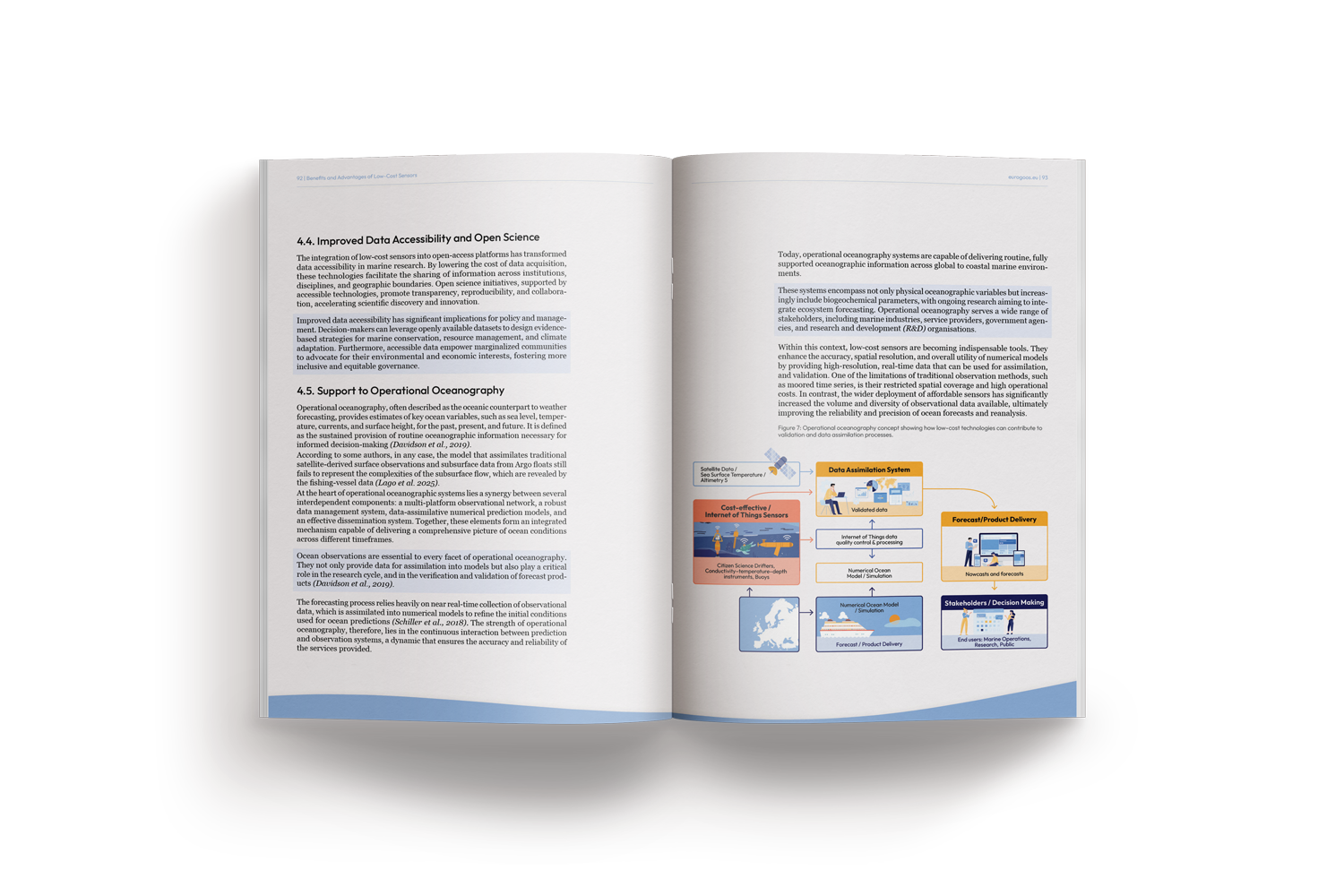
I delivered the full design of a 140-page scientific white paper (typesetting, layout, custom graphs, icons, and figures) plus a conference poster, against a hard deadline: printed copies had to be ready for the Ocean Sciences Meeting in Glasgow.
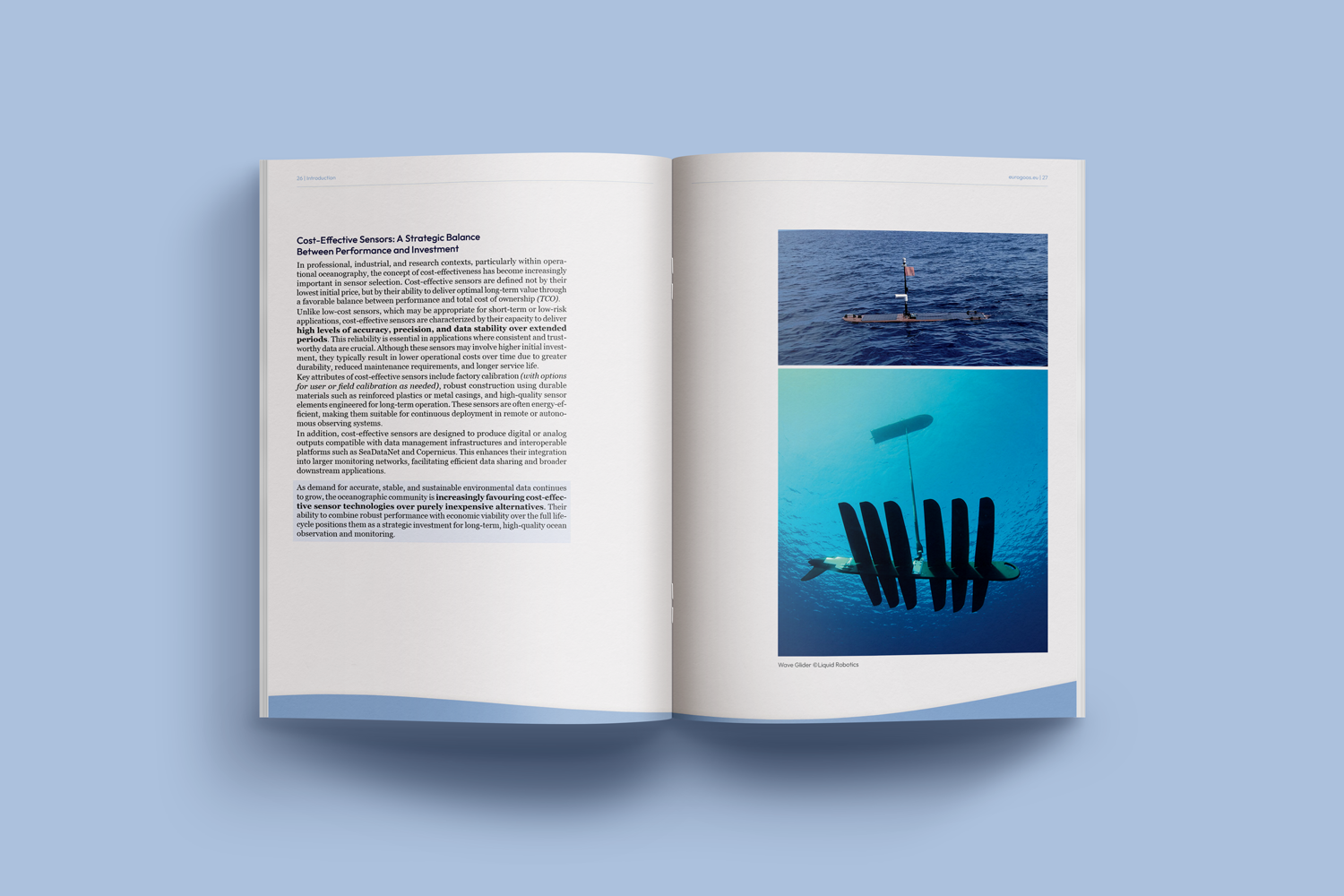
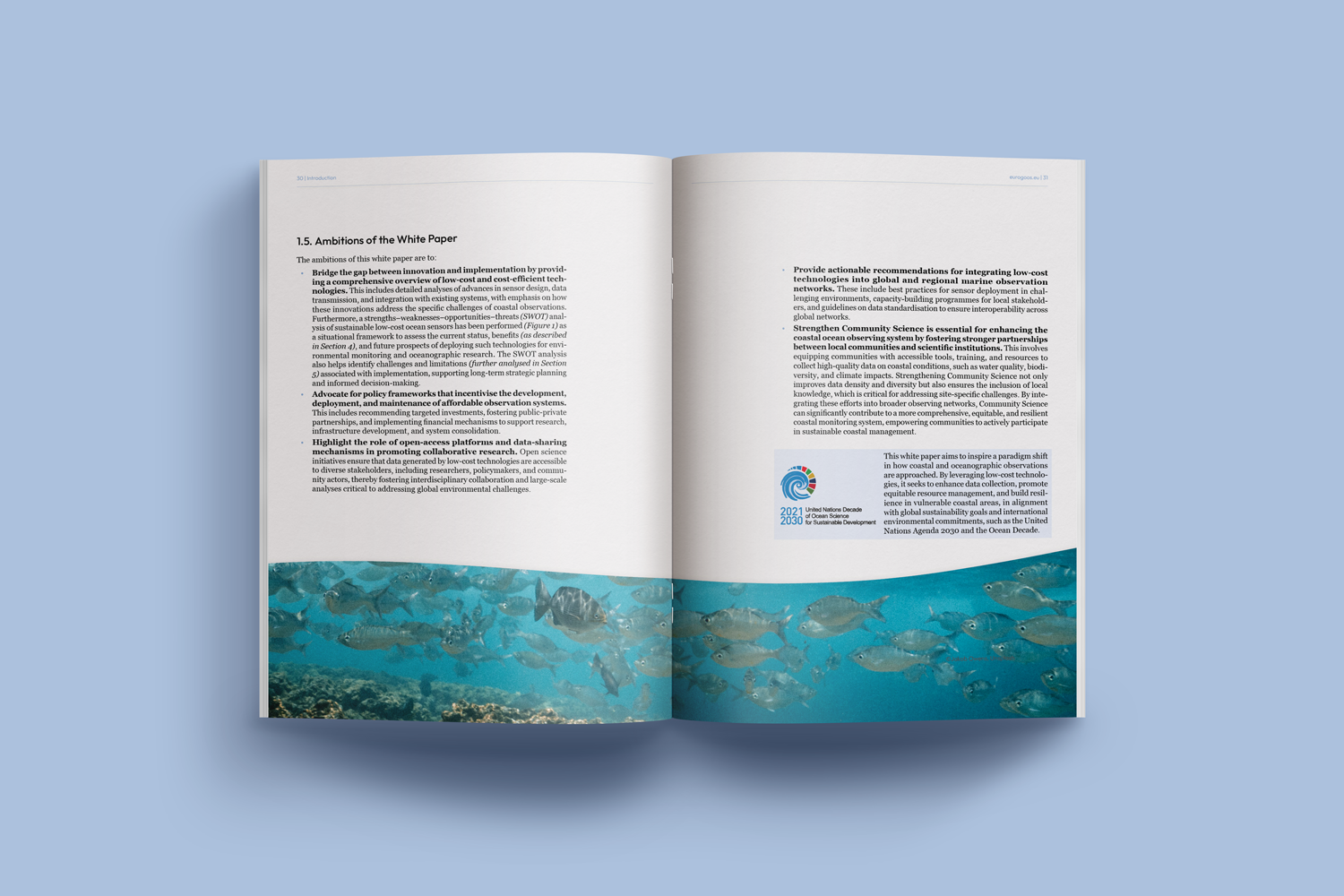
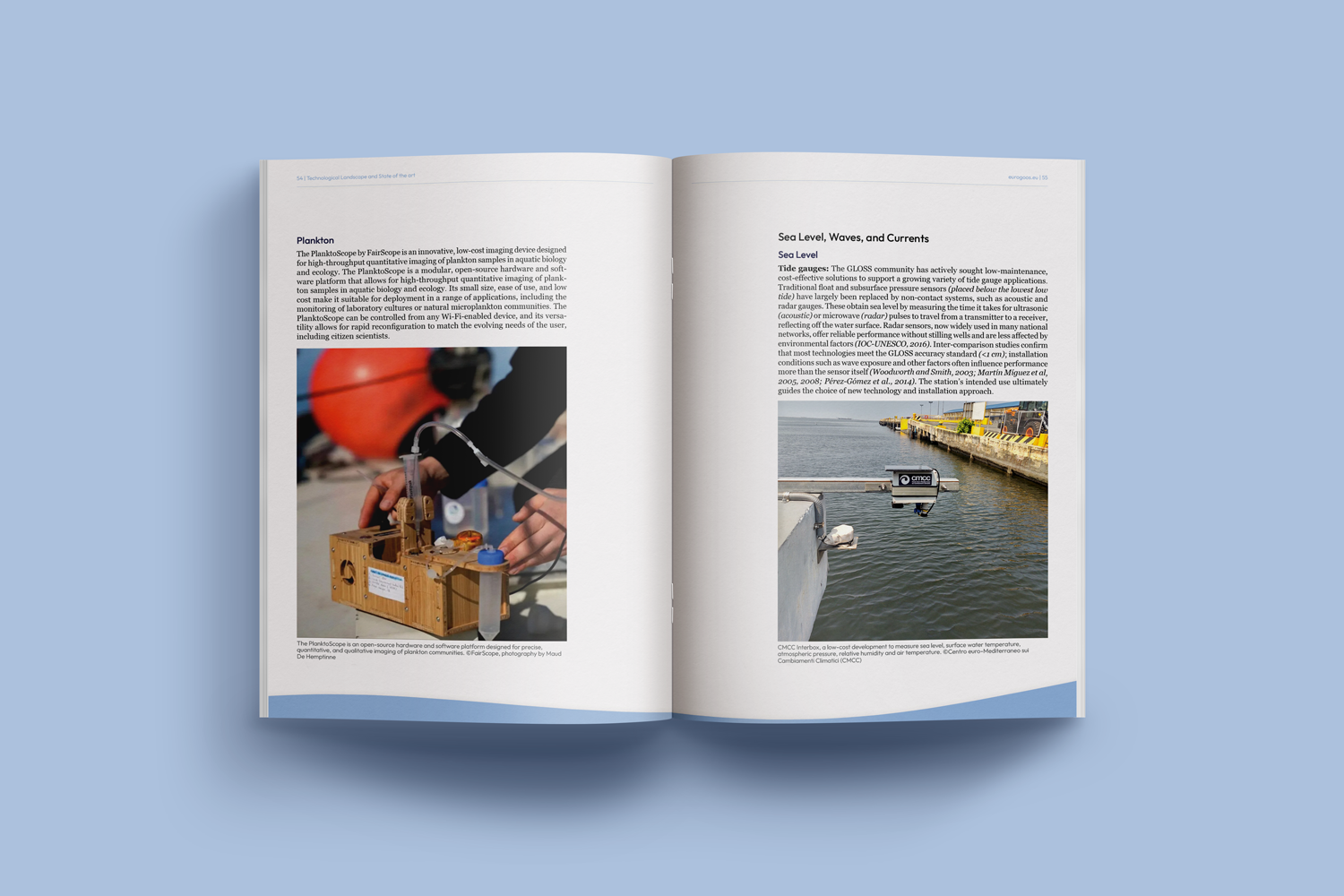
I worked directly with the lead author to source real-world photography showing affordable ocean monitoring in practice, replacing the generic stock imagery that would have undermined the publication's credibility. The result circulates through the hands of researchers and policymakers worldwide, with a DOI number.
EuroGOOS has returned to me across multiple projects. That repeat relationship is the metric I'm most proud of.
My deliverable: A publication-ready white paper and conference poster, on time, built for a global scientific audience..
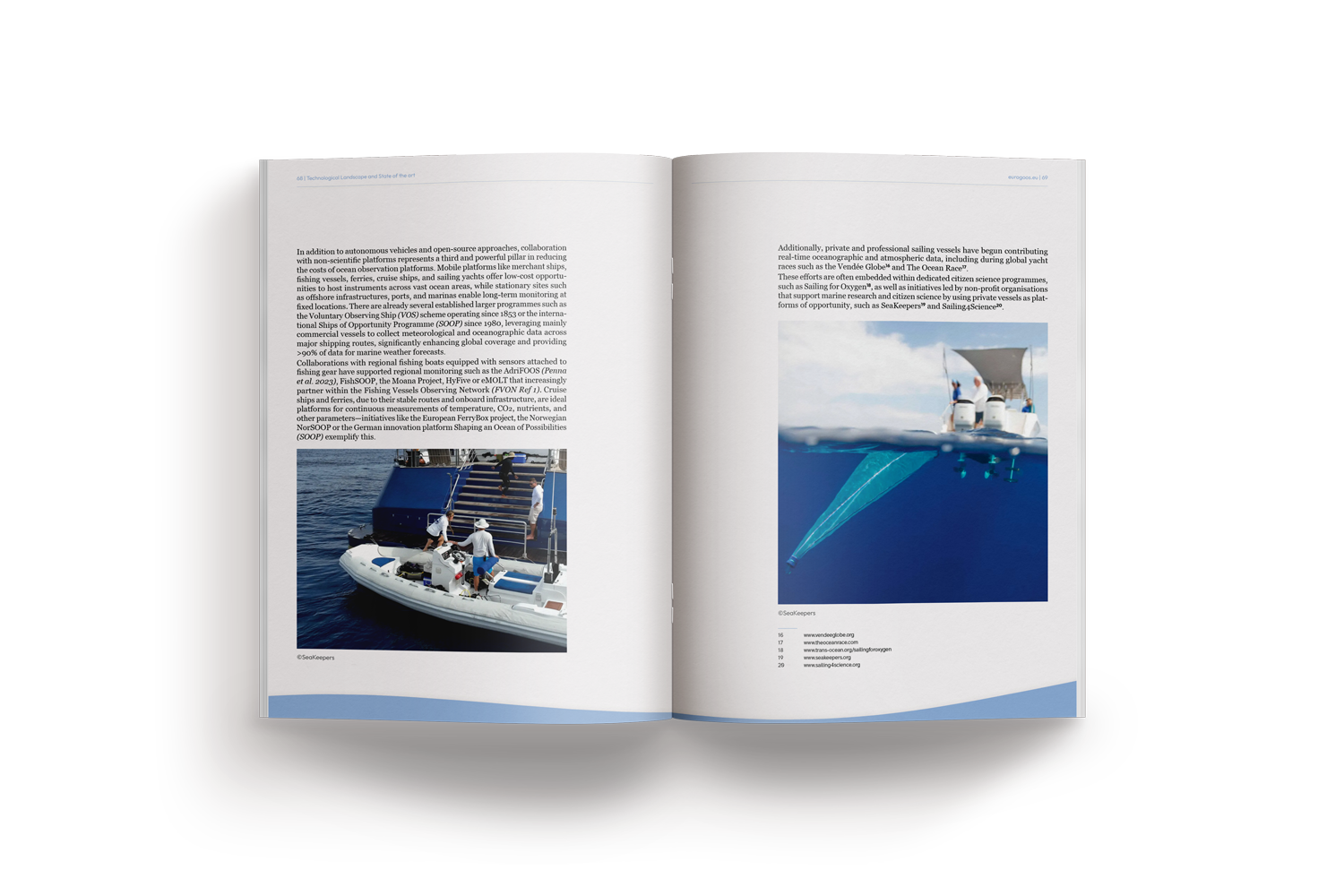
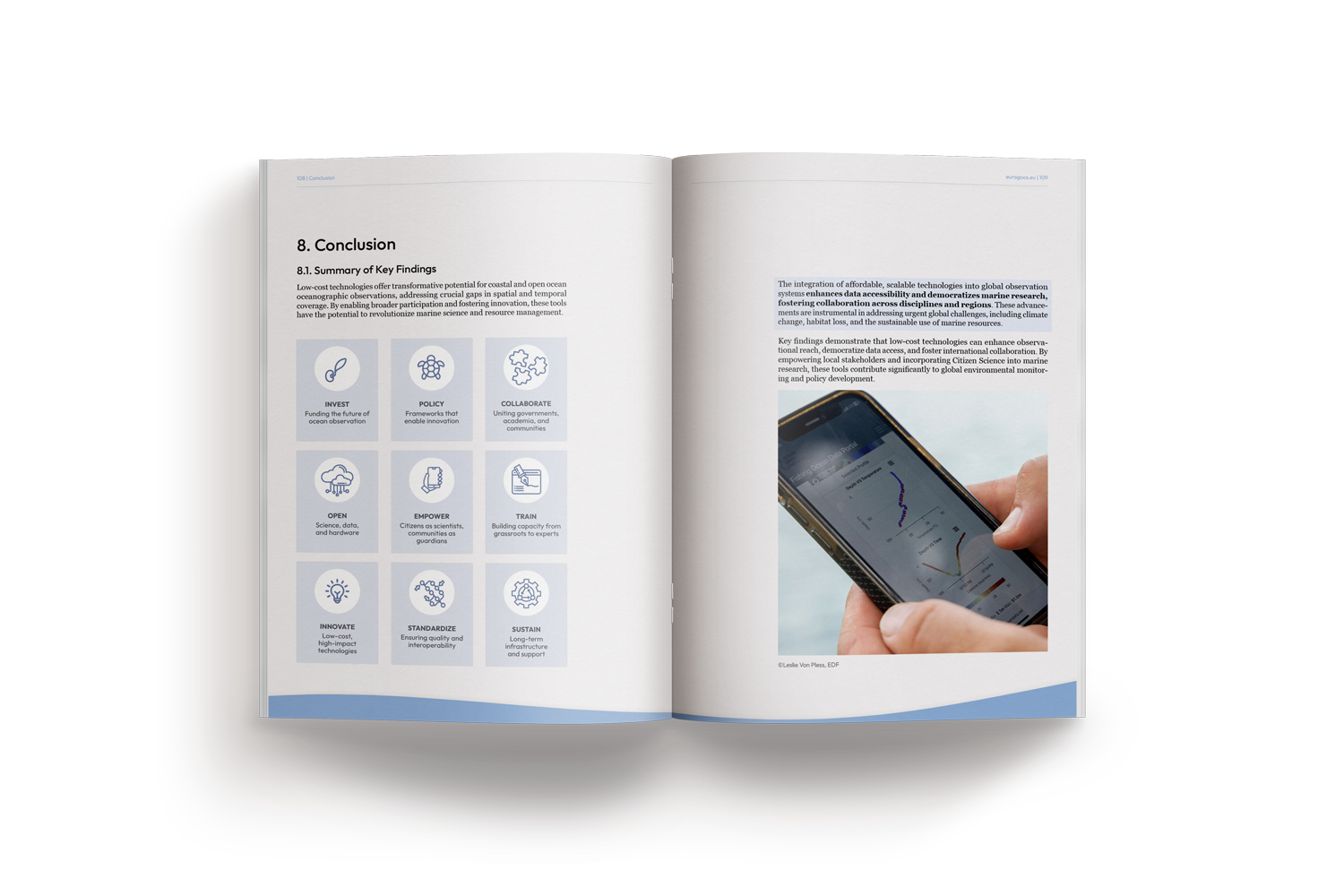
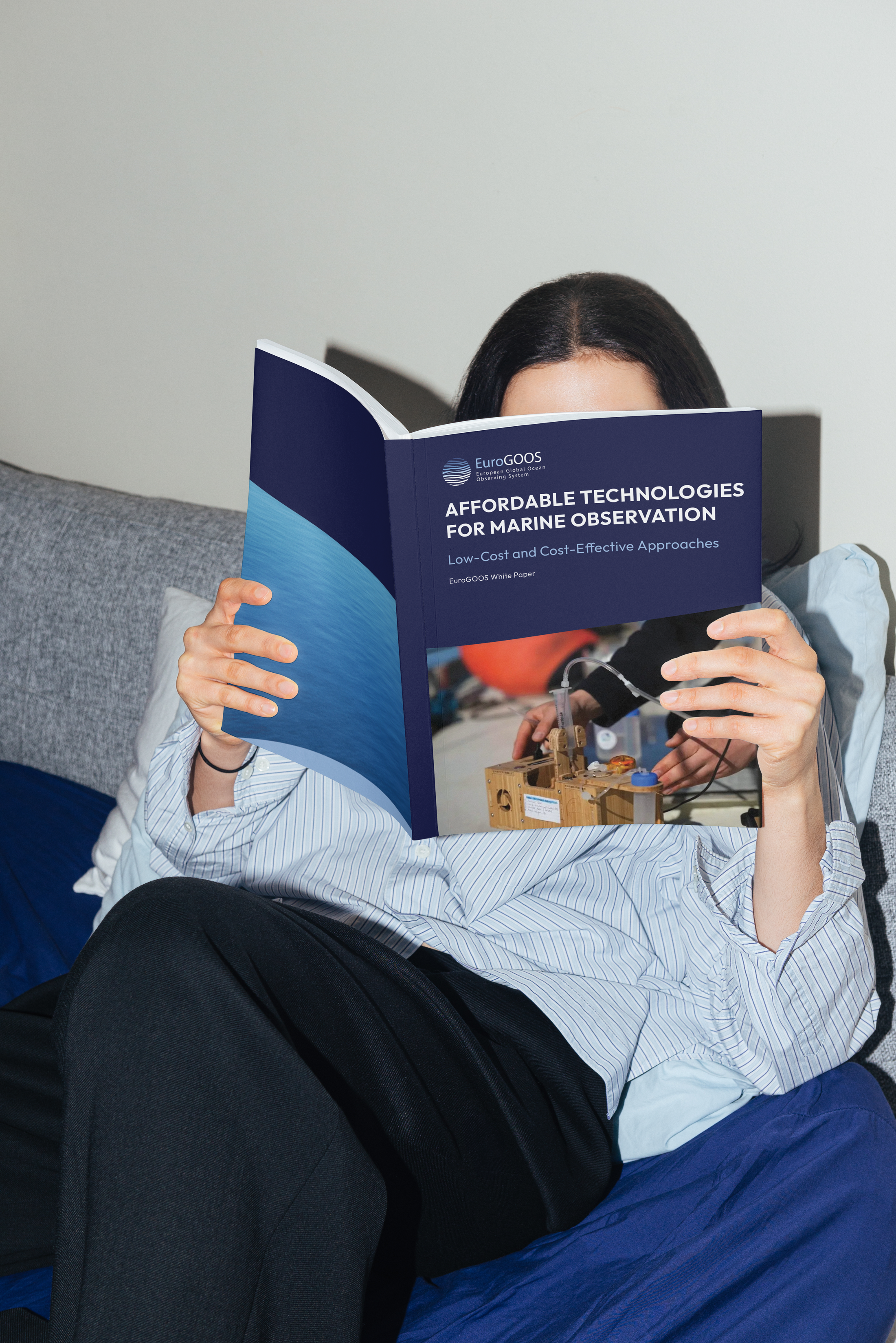
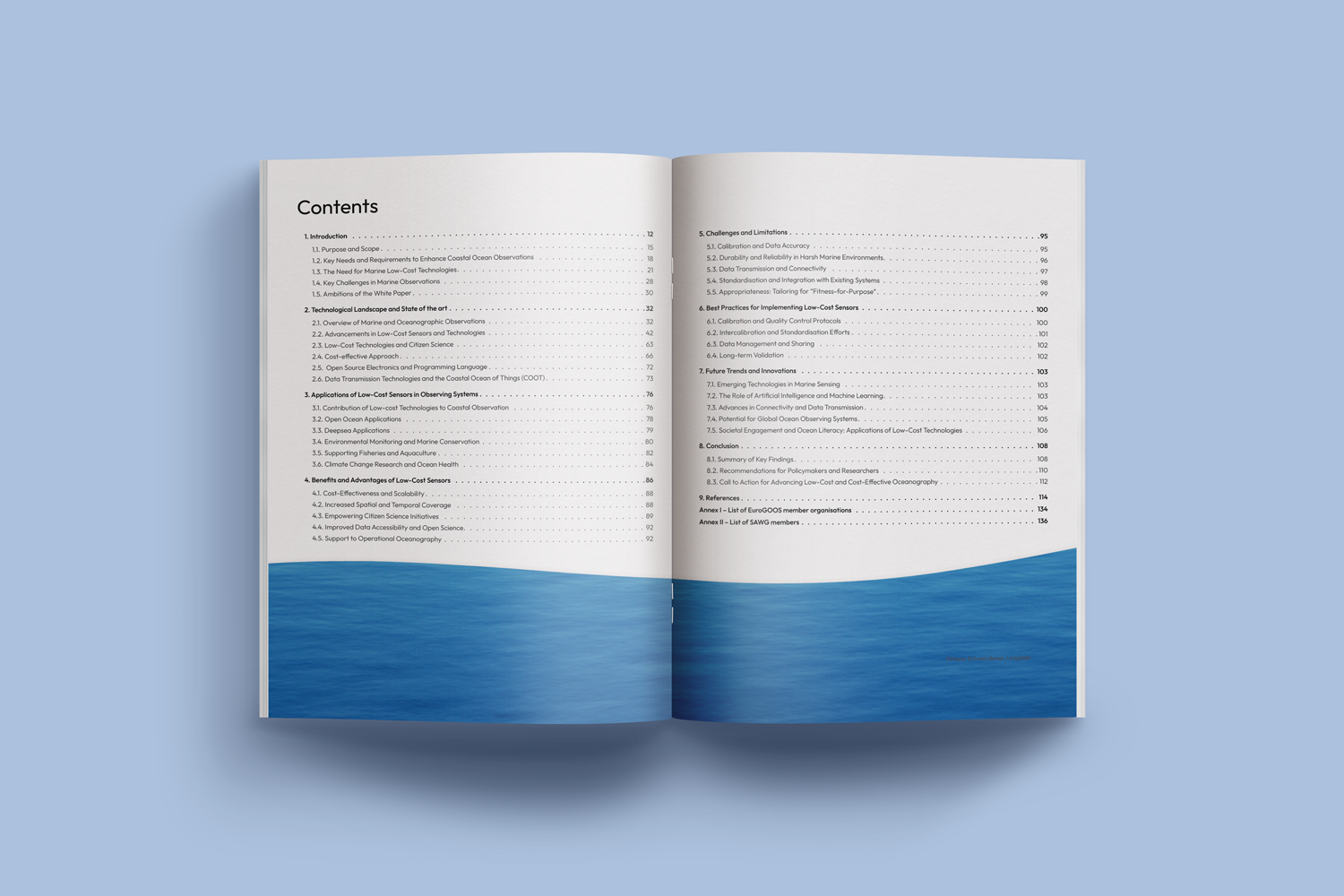

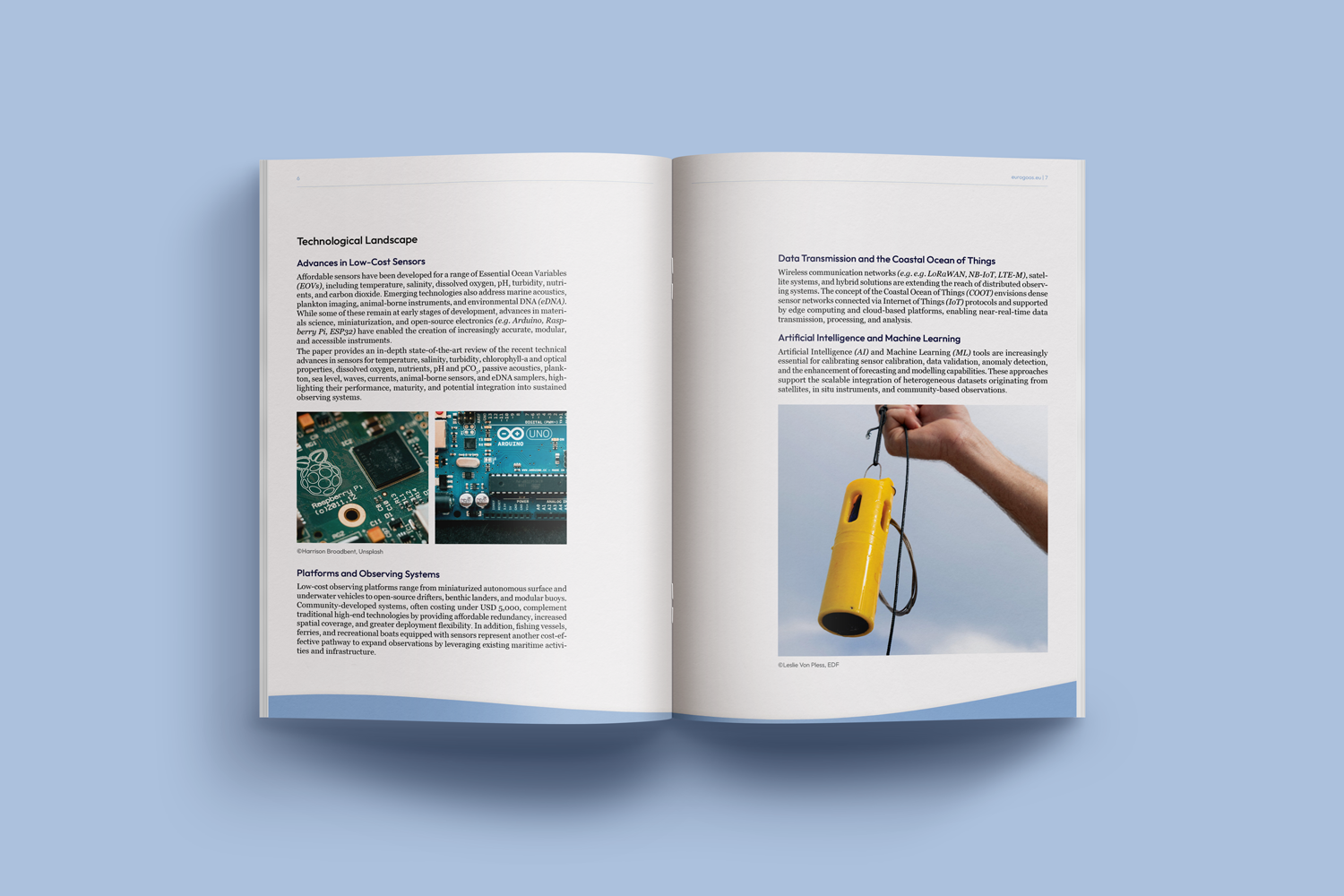
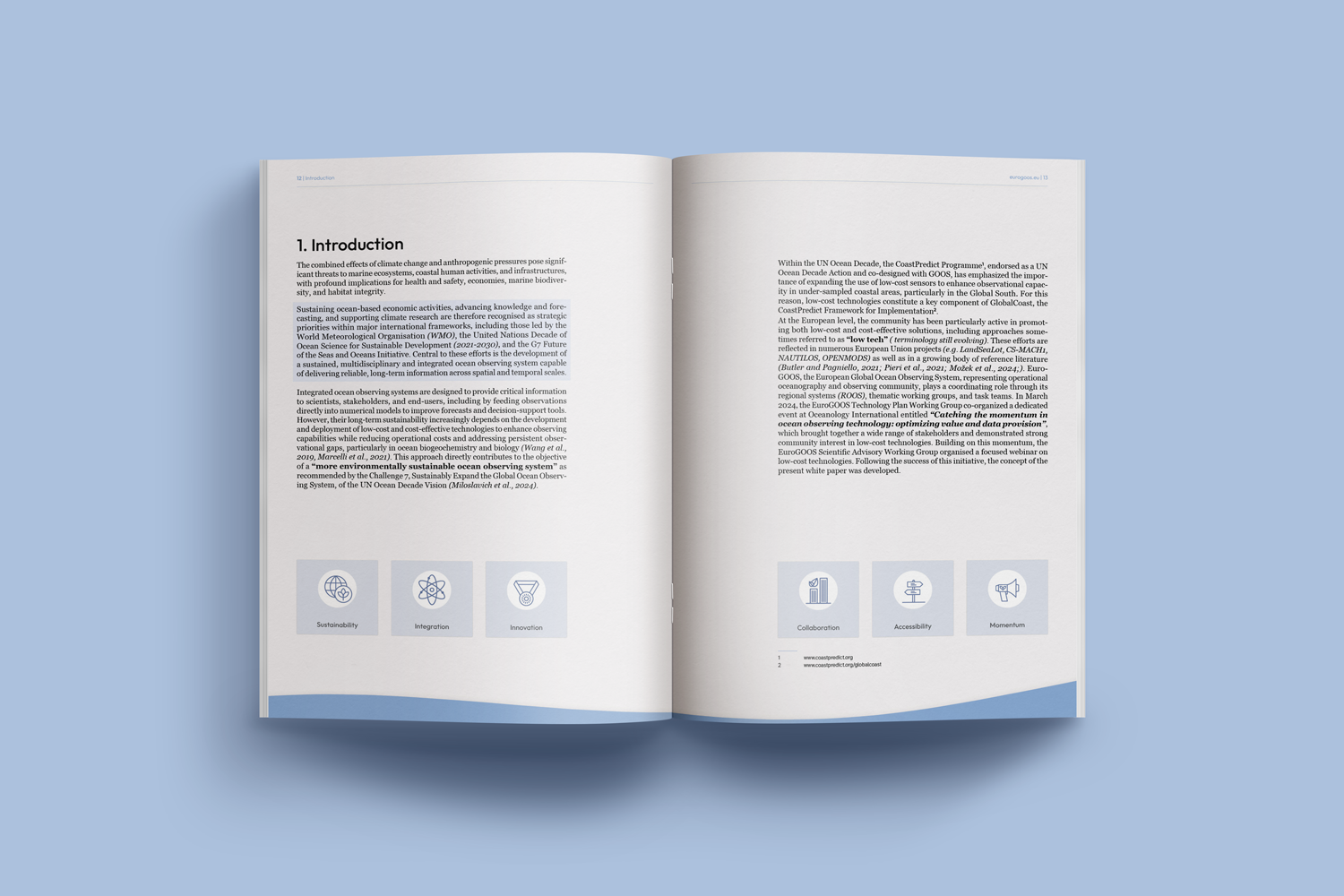
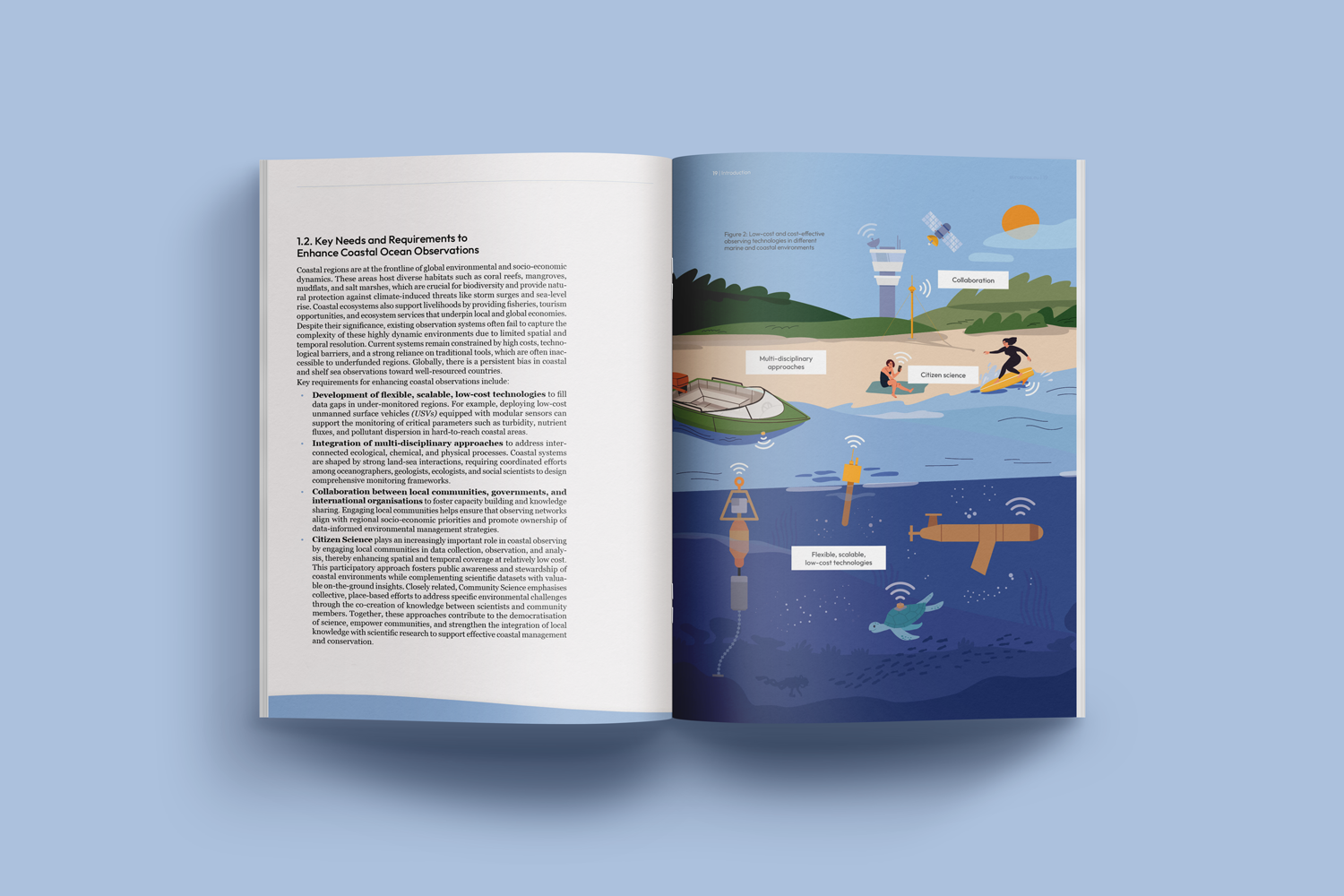
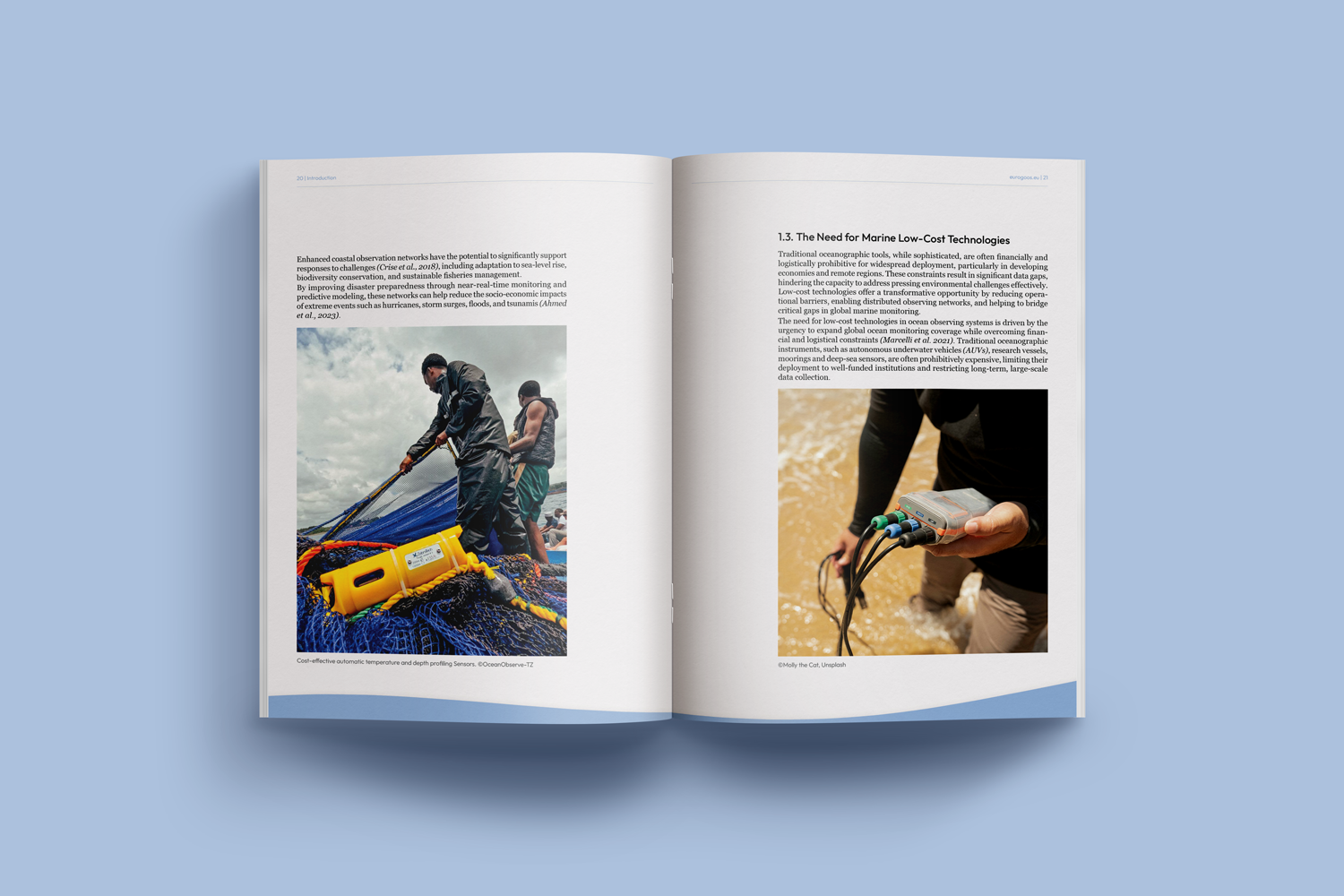
I handled the full typesetting and layout, built custom visuals, graphs, icons plus figures, and worked closely with the lead author to source real-world photography that actually shows what affordable ocean monitoring looks like in practice, not just a sea of stock images. (Pun intended. Always intended.)
The deadline was non-negotiable: printed copies had to be ready for the Ocean Sciences Meeting in Glasgow, the flagship gathering of the global ocean science community.
In 2024, nearly 6,000 attendees from 60 countries showed up. OSM is where cutting-edge research meets the people who act on it, and this publication needed to be in their hands, looking sharp, from day one.
On top of the White Paper itself, I also designed a conference poster to support Prof. Marco Marcelli's session, giving the publication a visible presence in the poster area and helping draw eyes to the work.
This publication will circulate through the hands of researchers, policymakers, and ocean advocates worldwide. The DOI is live. The pages are clean and the science is accessible.
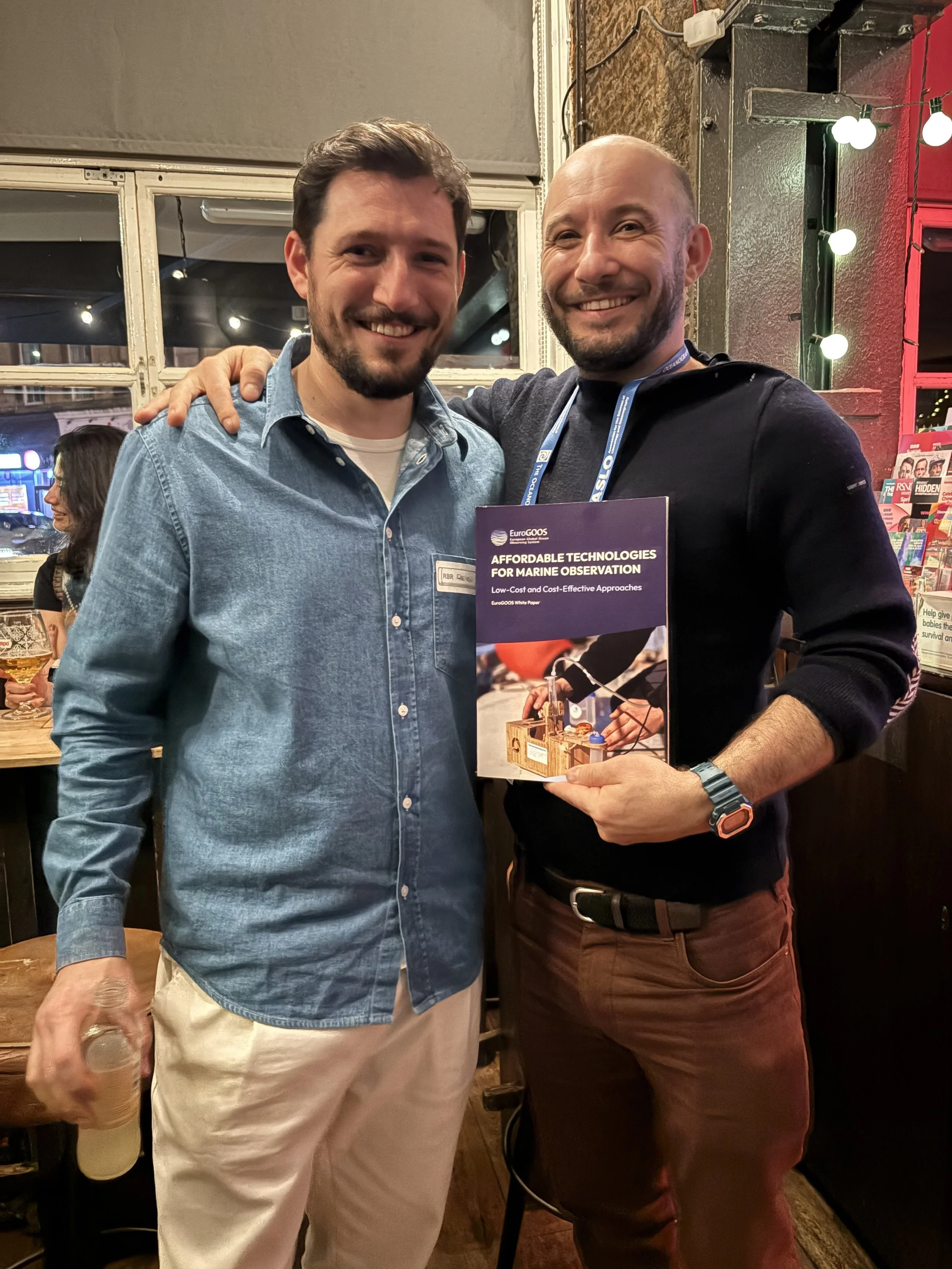
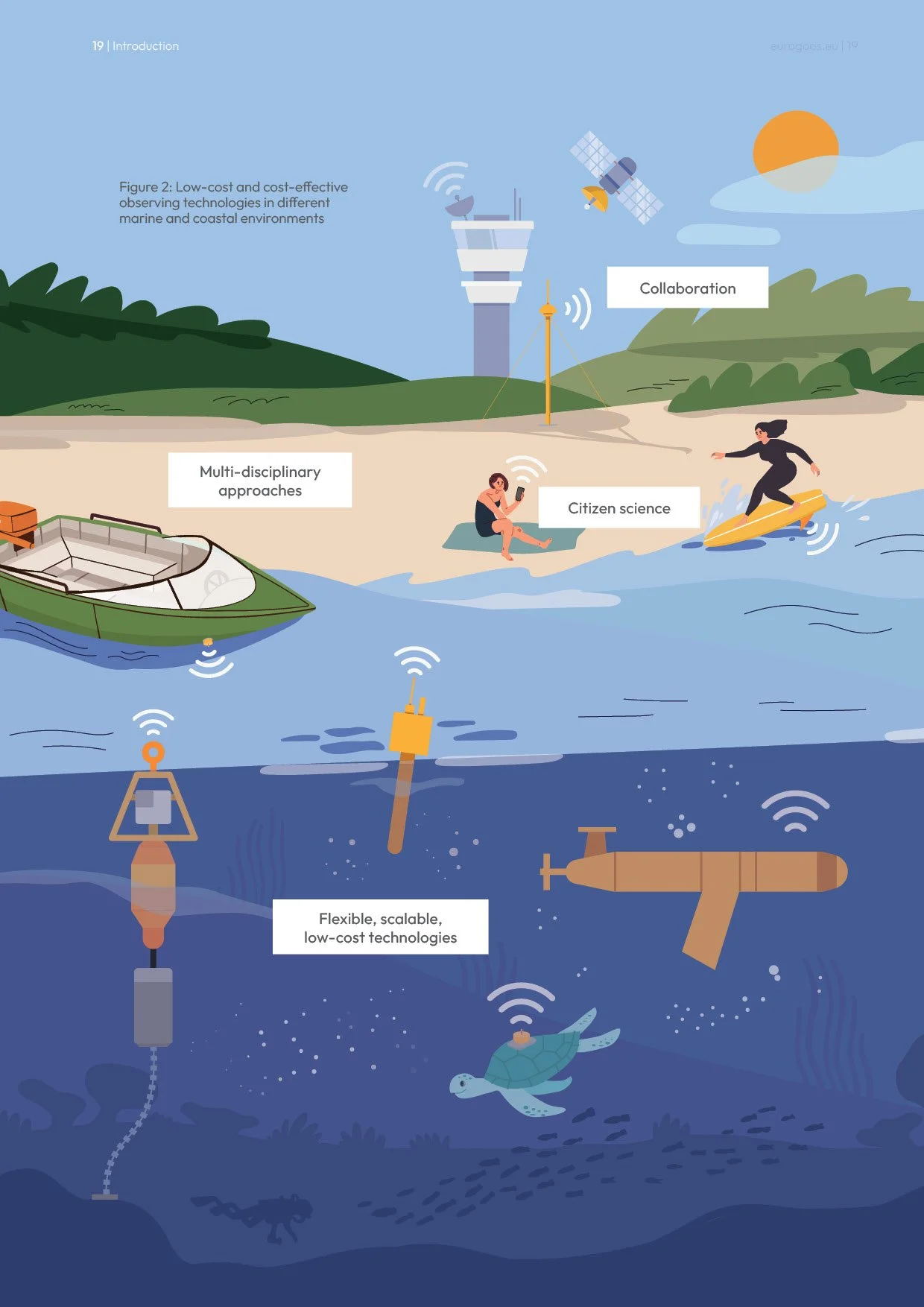
EuroGOOS keeps coming back, and honestly, that says more than anything I could write here. We've worked together across several projects now, every year or two they arrive with something new and important, and every time the brief is the same: make complex science feel clear, credible, and worth reading. That's what I do.
If you're working on a white paper, policy paper, or scientific publication and you need someone who understands the difference between a layout that just holds content and one that actually serves it, let's talk.