
Insights on innovative renewables
Completed in: February 2026
Author: Dr Marlène Siméon, Head of EU Policy
Graphic design: Agata Smok
I designed a policy report that needed to do something difficult: make EU energy directives readable enough for decision-makers to act on, without losing the rigour experts would scrutinise.
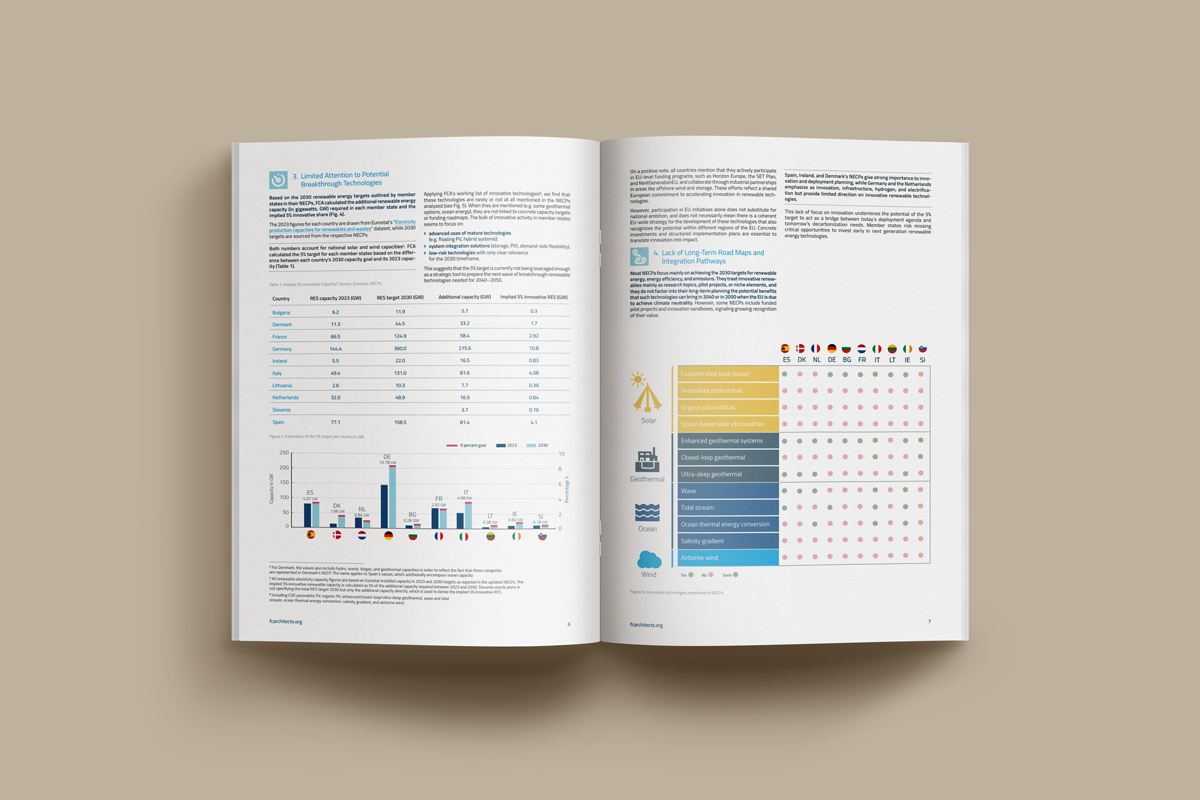
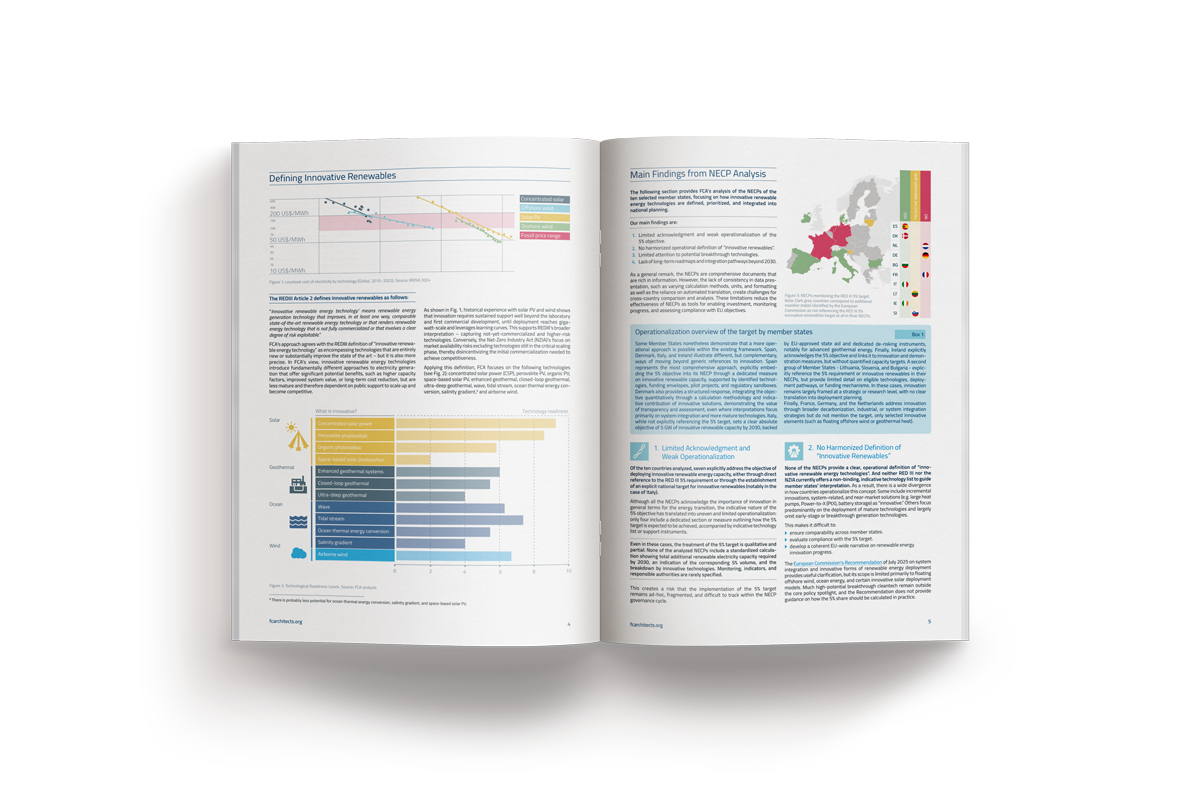
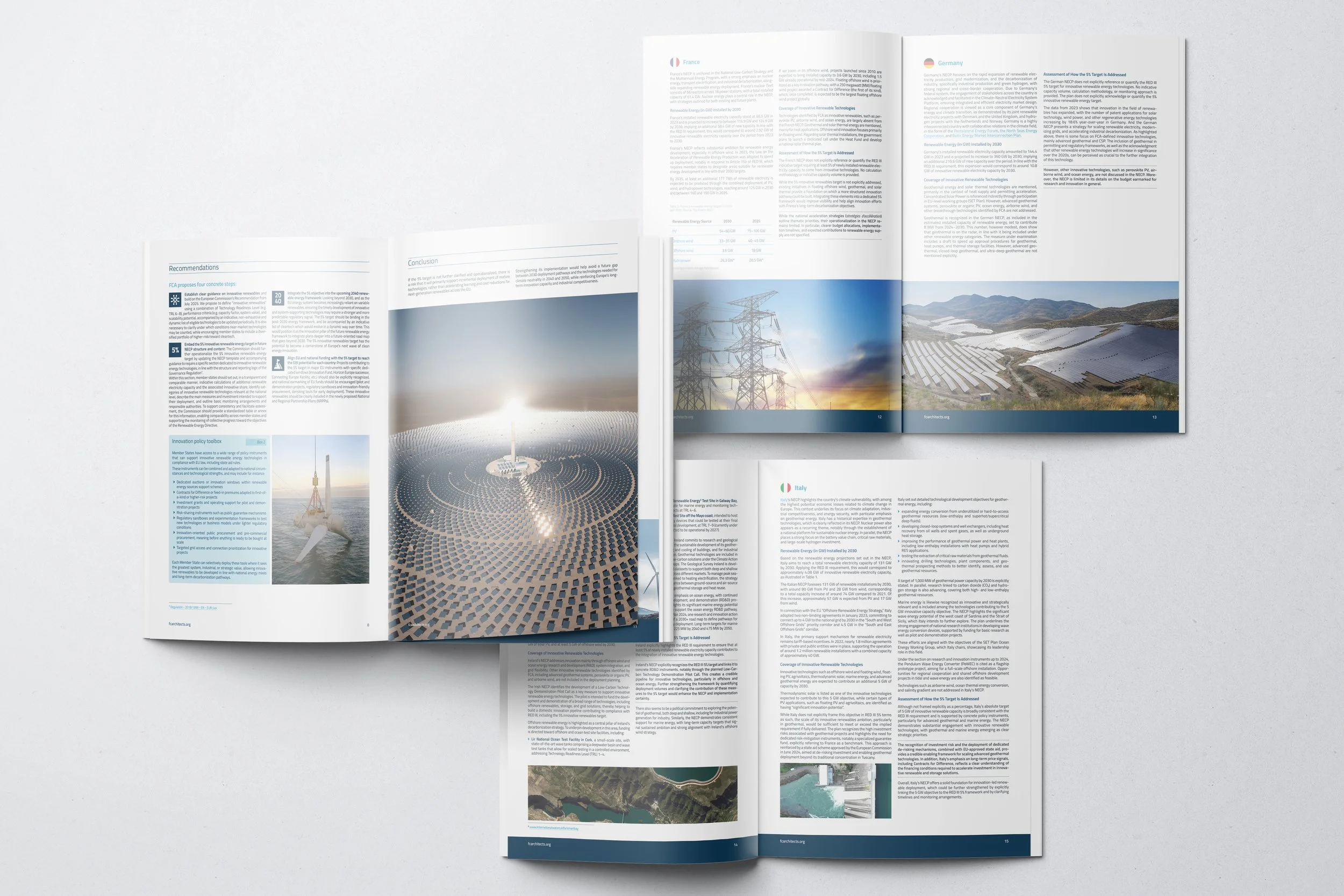
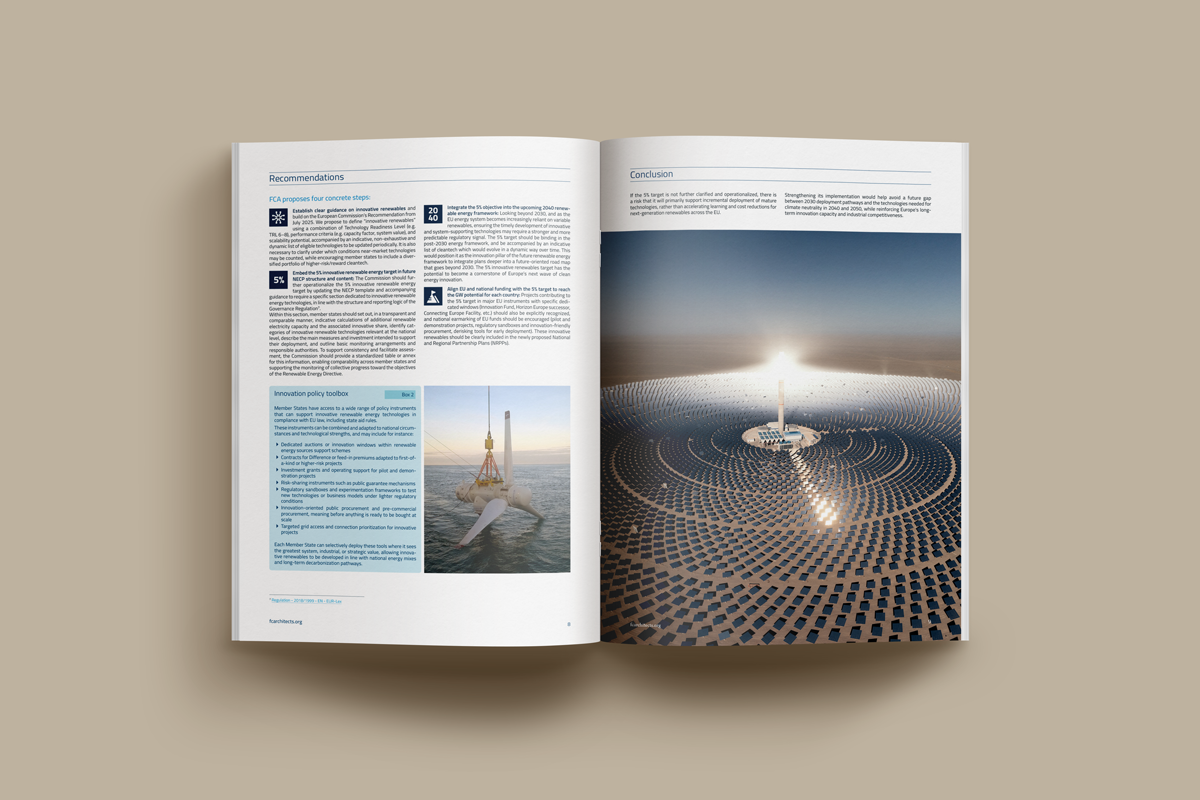
I translated 10 country analyses and four policy recommendations into a structured visual system. Data visualisations showing exactly which countries are meeting (or missing) their targets, strategic photography grounding abstract policy in real technologies, and navigation clear enough to brief a minister on.
The report landed at the European Commission during the drafting of the next renewable energy framework, giving member states concrete guidance on unlocking 25+ gigawatts of next-generation capacity by 2030.
My deliverable: Complex policy research made actionable, without dumbing it down.
Breaking the policy translation problem
We speak to policymakers as if they were aliens, and then we wonder why the message doesn't land. Here's what I believe: policymakers react to the same things we all do. Clarity. Relevance. Concrete examples.
This project needed to walk a tightrope. Accurate enough for energy experts scrutinising every detail. Clear enough for decision-makers juggling twelve different files. Concrete enough that someone could explain it to their constituent over coffee.
Because yes, we're speaking to policymakers and they will ultimately need to explain things back to people who don't live in the policy bubble. They need material that connects to jobs, industries, and climate action.
What made it work:
Visual clarity in presenting complex regulatory frameworks without dumbing things down,
Data visualisation that shows exactly which countries are doing what (and what they're missing),
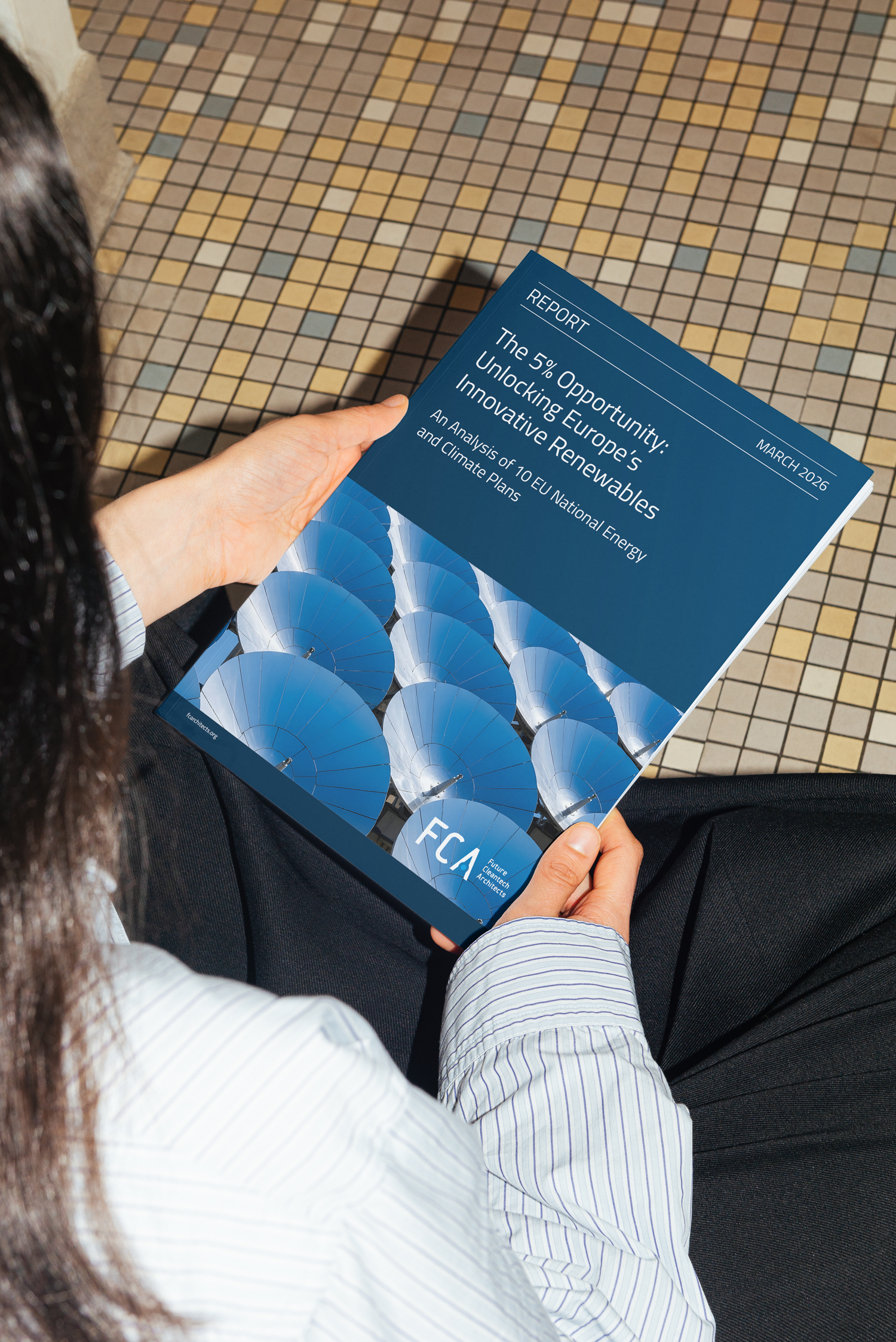
Strategic photography grounding abstract policy in tangible renewable technologies,
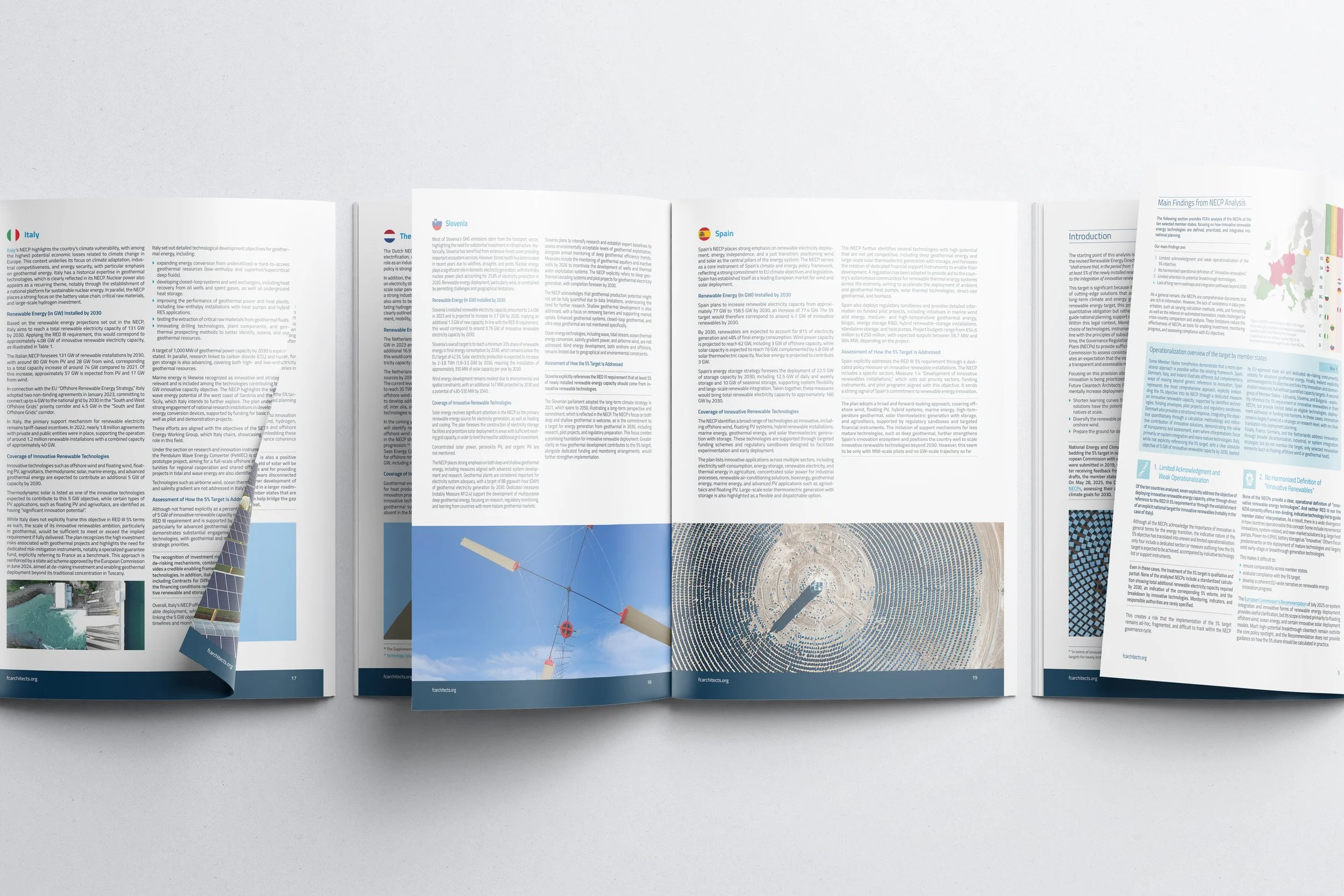
Structured navigation through 10 country analyses, 4 concrete policy recommendations and one urgent deadline.
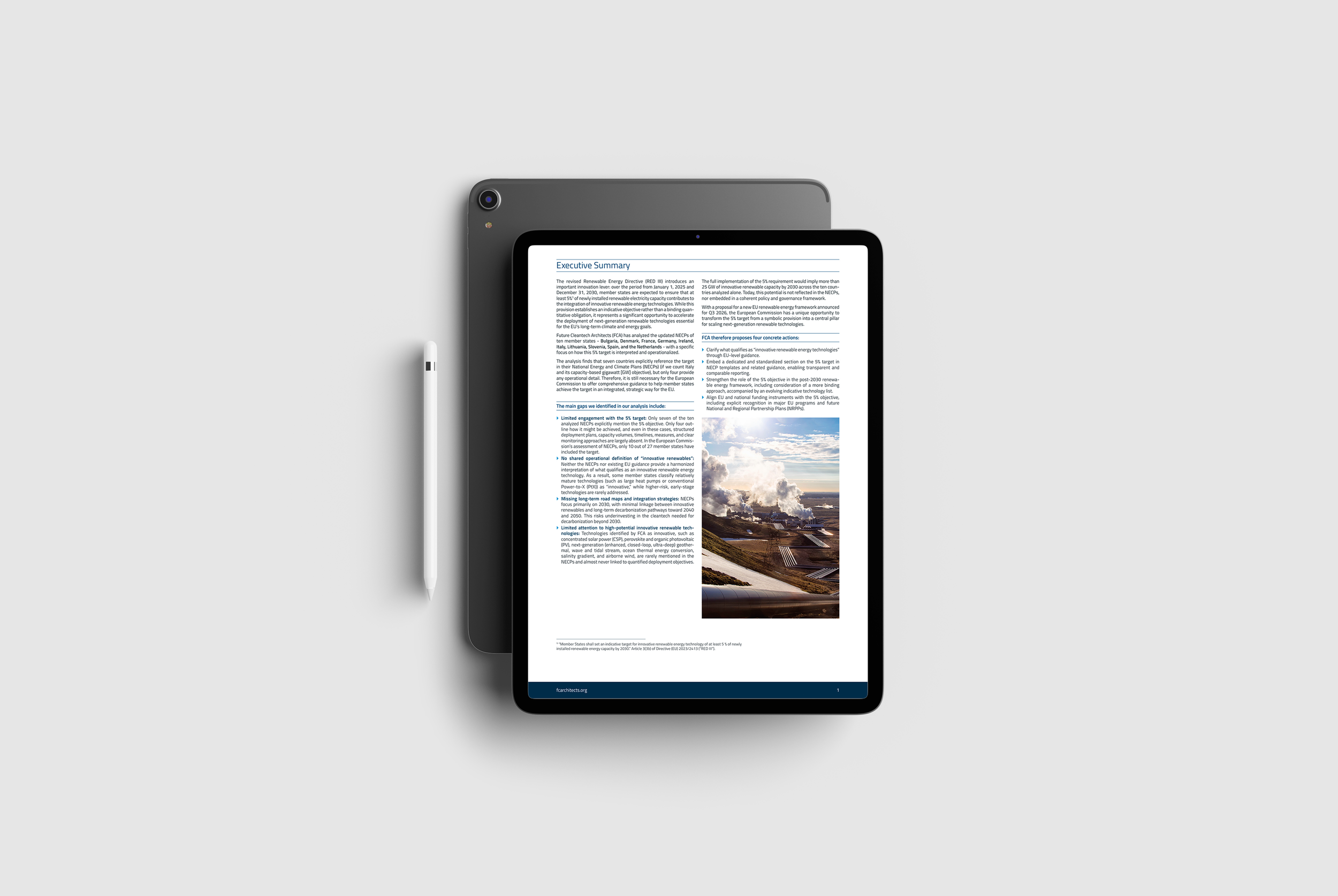
The Renewable Energy Directive quietly includes this provision: 5% of new renewable capacity should be innovative technologies. Sounds technical and sounds optional too. But here's what that means: over 25 gigawatts of next-generation renewables across just ten EU countries by 2030:
Concentrated solar power that works after sunset.
Next-generation geothermal that taps ultra-deep heat.
Wave energy harvesting ocean power.
Airborne wind systems.
Perovskite solar cells.
These aren't science fiction! They're the technologies we need for decarbonisation beyond 2030… andright now they're barely mentioned in national plans.
This publication reaches the European Commission just as they're drafting the next renewable energy framework. It gives member states concrete guidance on implementing the 5% target. It shows innovators and investors where the gaps are.
Most importantly, it proves that complex policy topics don't need oversimplification. They need smart communication!
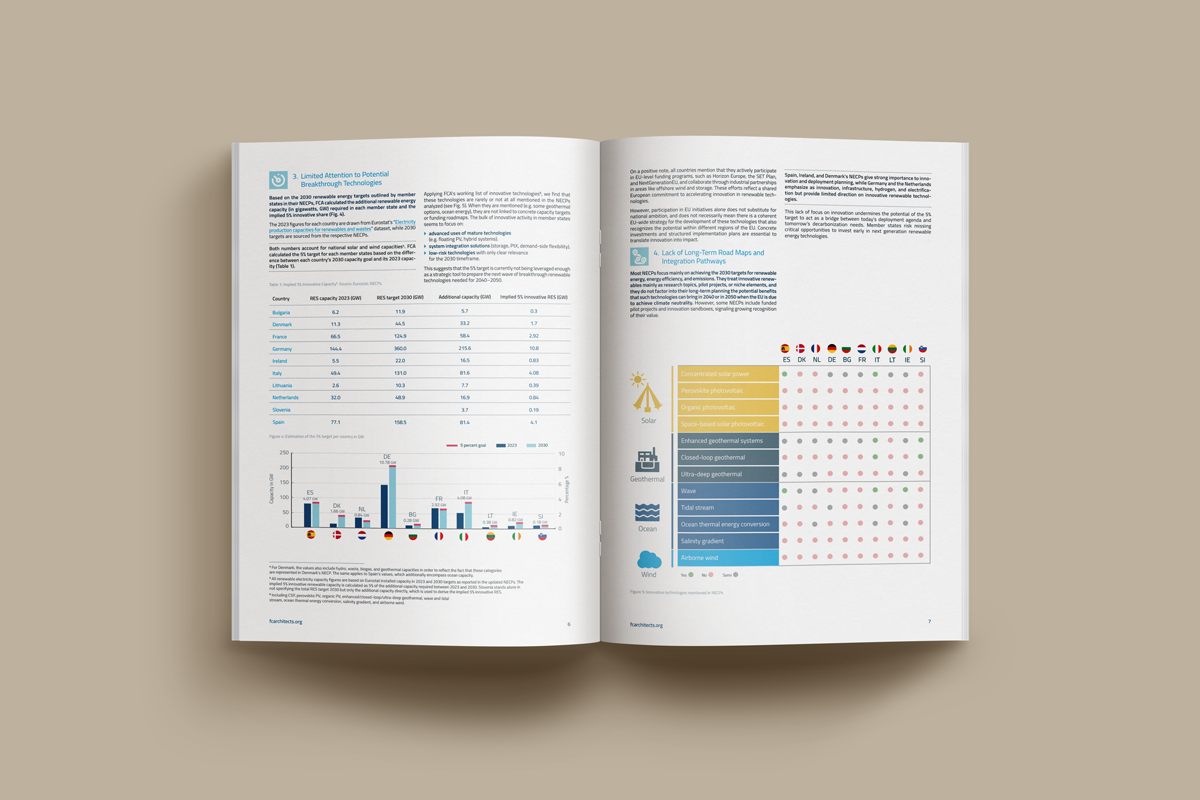
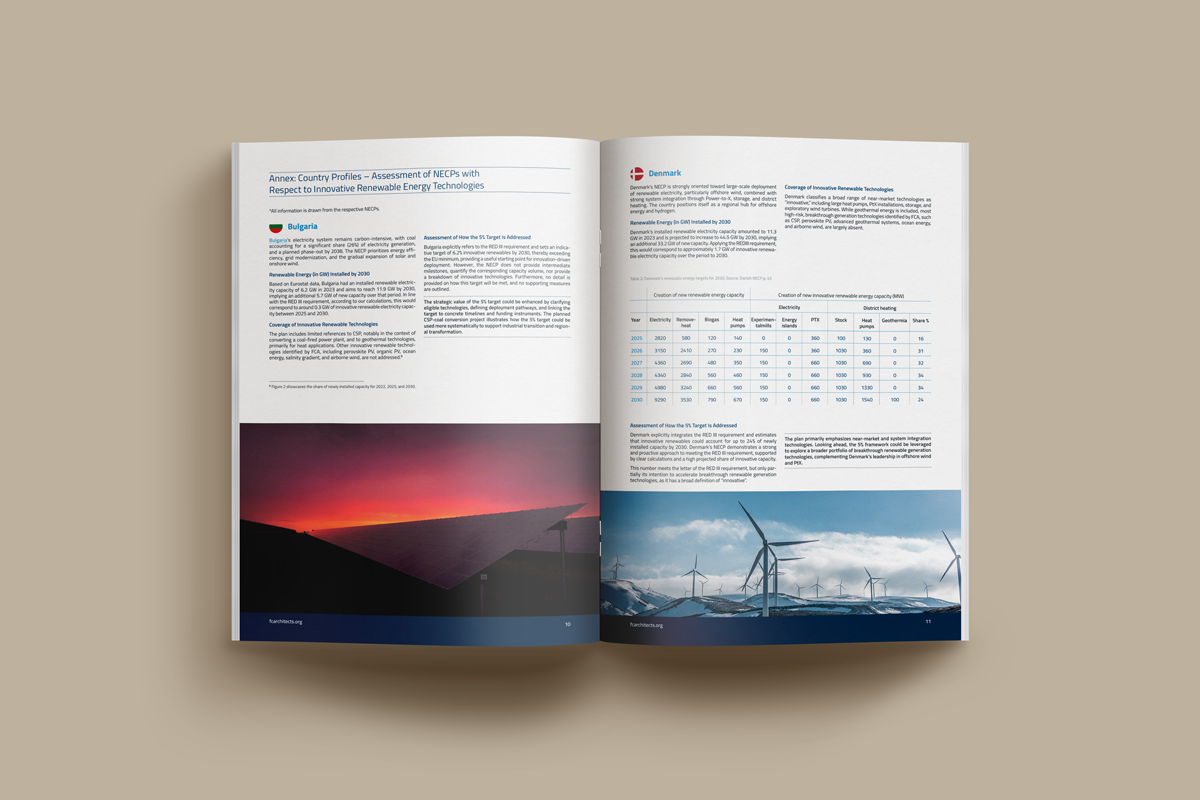
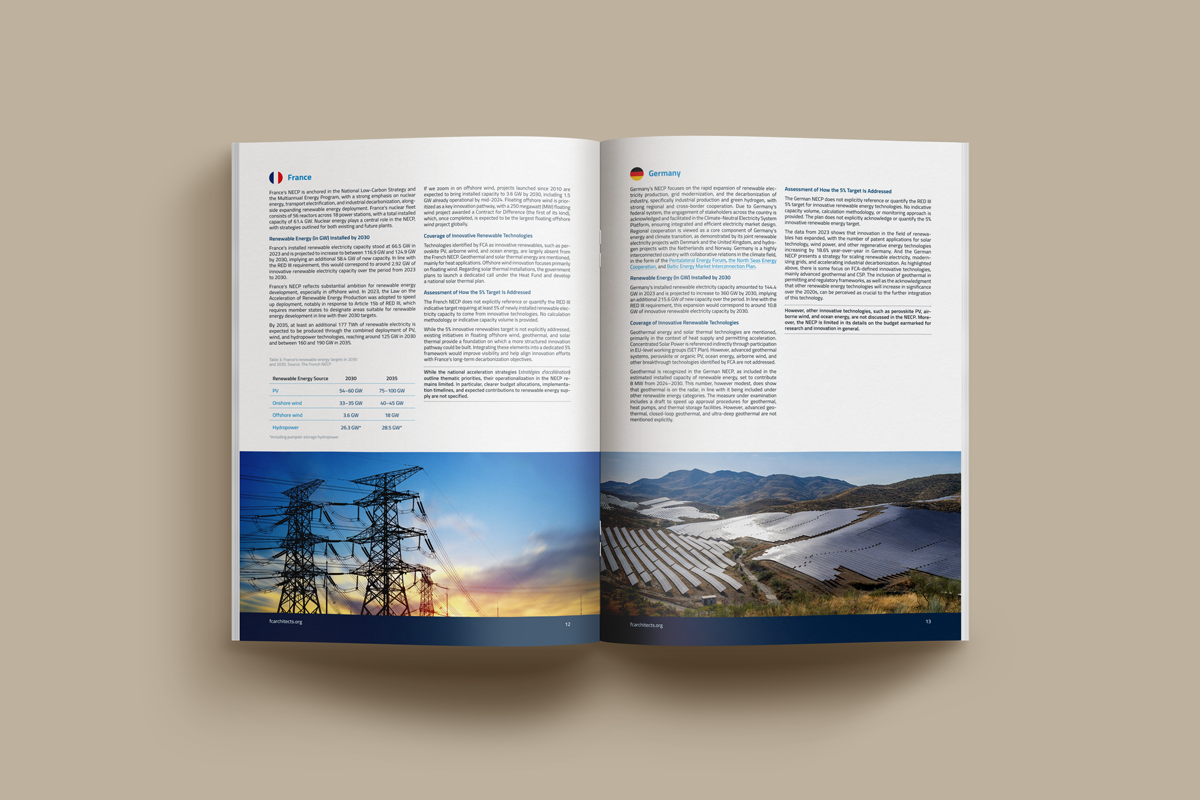
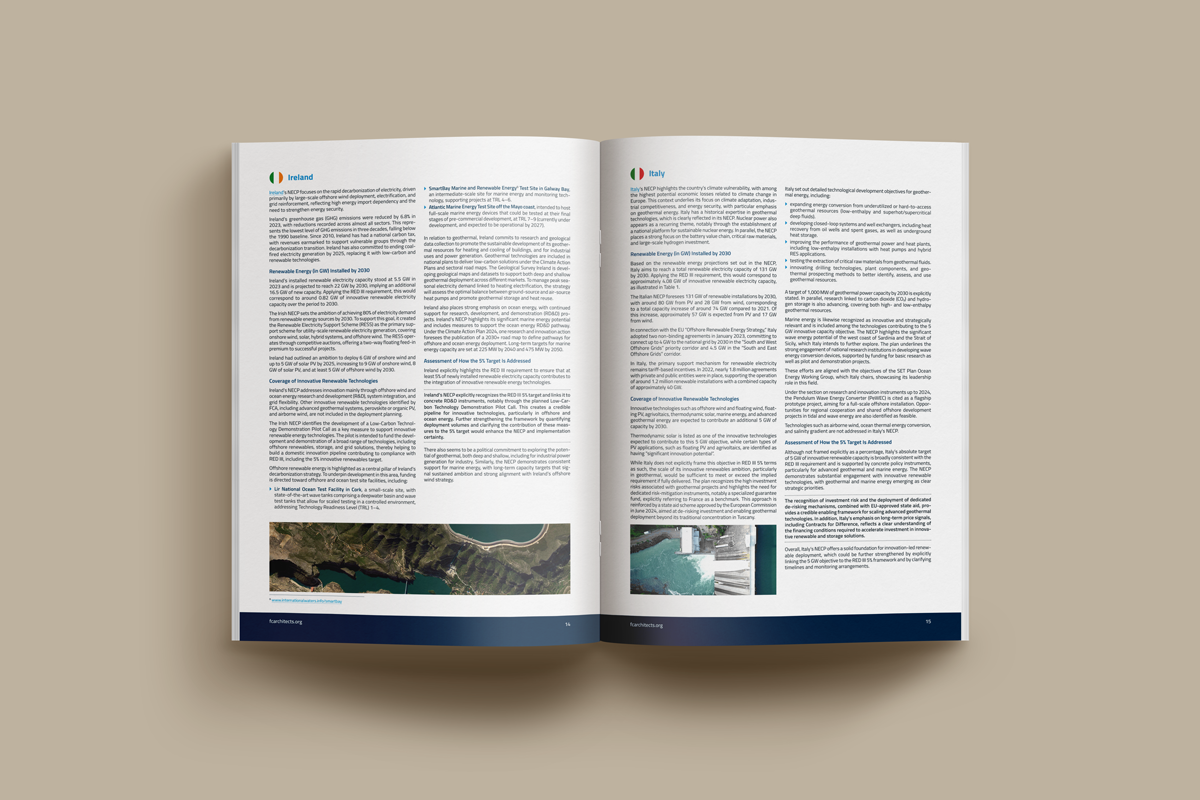
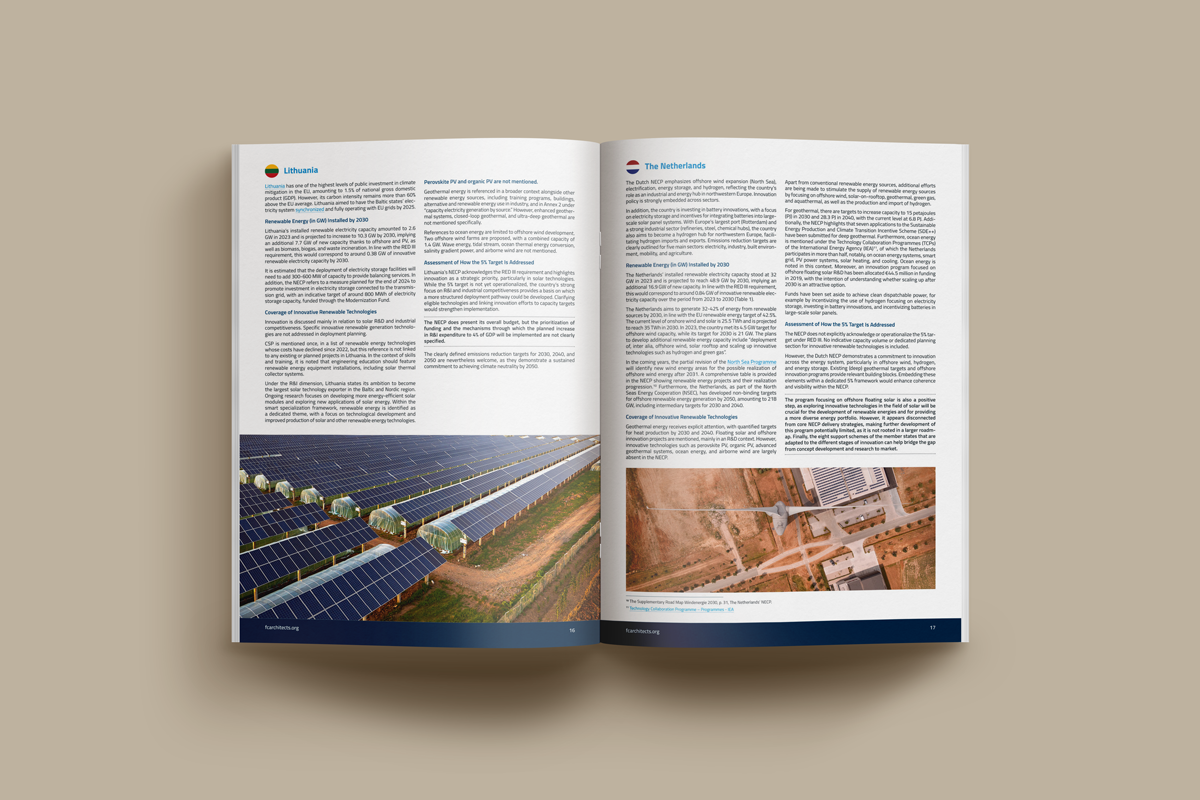
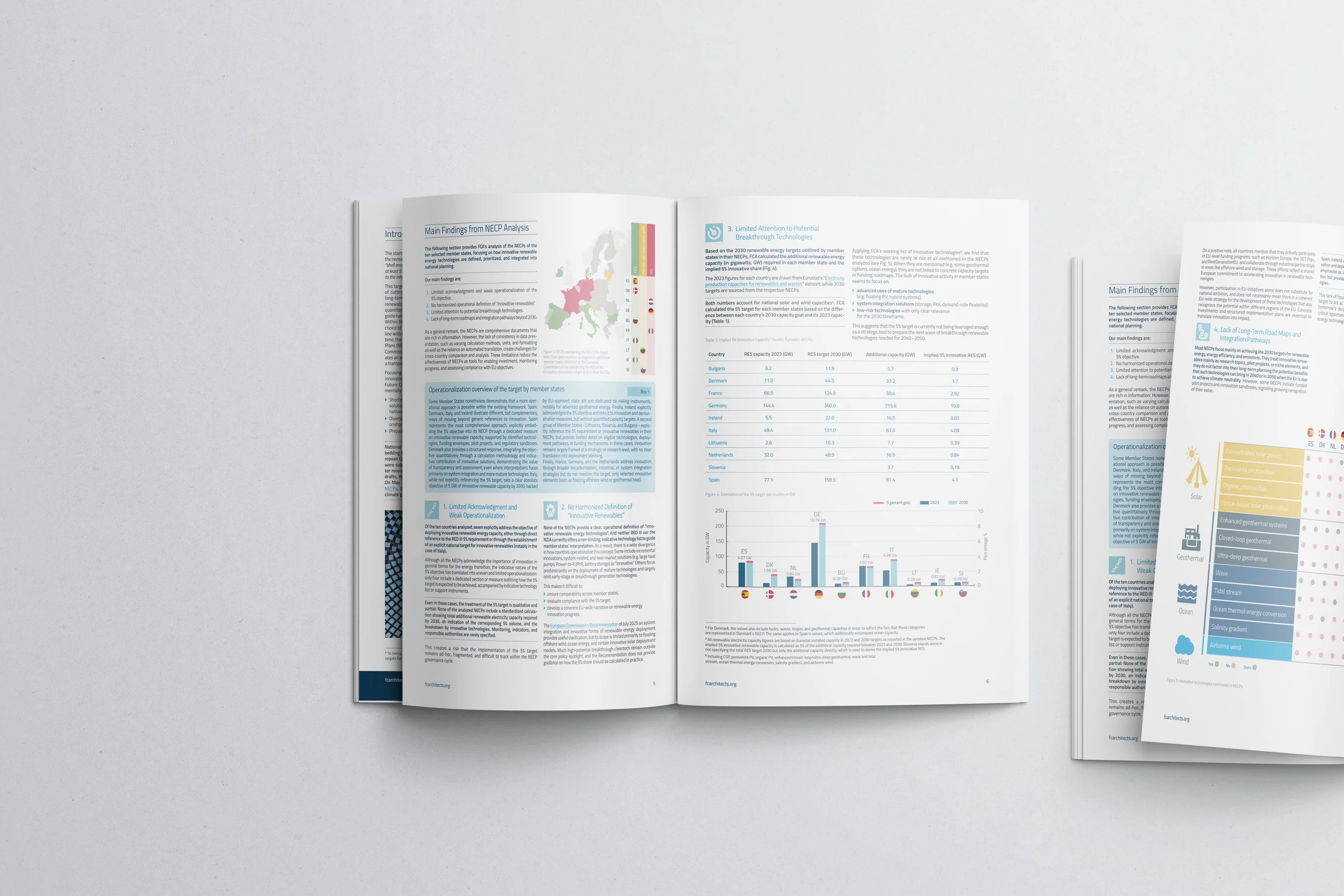
Good policy listens, and great policy listens to data.
The Brussels bubble has a translation problem, but that doesn't mean we should talk down to it, some topics are objectively complex. The challenge isn't to make them simple. It's to make them clear.
This report found the sweet spot: detailed enough to withstand expert scrutiny, accessible enough to drive actual decisions, concrete enough to turn evidence into action.
Your research could do the same. You've identified the innovation gaps. The policy barriers. The pathways to net zero. Now let's make sure they reach the people who can close those gaps.
Project team: Marlène Siméon, Gizem Catal, Francesca Brunner
Client: Future Cleantech Architects
Citation: M. Siméon, L. Hvass Kure, "Insights on Innovative Renewables. 10 EU National Energy and Climate Plans", Future Cleantech Architects, Remscheid, Germany, Feb. 2026.